Leave Your Message
Engineered for high-density metropolitan living in Seoul, Incheon, and Busan: ultra-compact footprints, rapid 360° high-efficiency thermal convection, and digital precision control.
Understanding the intersection of rapid culinary modernization, the booming Home Meal Replacement (HMR) industry, and hyper-dense single-person living spaces.
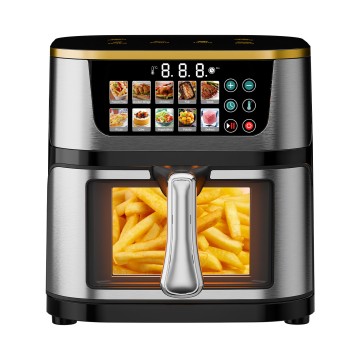
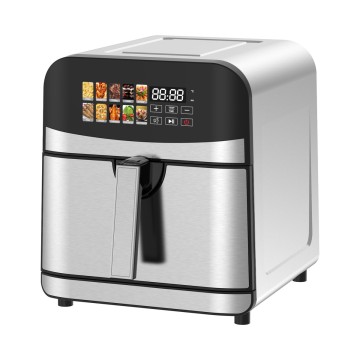
Over 34% of South Korean households now consist of single occupants, primarily concentrated in urban officetels across Seoul, Gyeonggi-do, and Busan. These kitchens require high power density within ultra-compact form factors. Our 3.5L to 5L compact digital fryers deliver high-velocity air fry capabilities without occupying precious countertop surface, addressing the direct needs of modern Korean young professionals.
The Korean Home Meal Replacement (HMR) and frozen gourmet sector—driven by CJ CheilJedang, Pulmuone, and Emart Peacock—has reshaped cooking habits. Pre-packaged items like frozen Mandu, crispy Tongdak (whole chicken), Tonkatsu, and Hotteok require specialized algorithmic heat curves (180°C to 205°C rapid moisture retention) to replicate restaurant crispiness, which our custom microcontrollers execute accurately.
Importing kitchen appliances into South Korea demands strict electrical safety and electromagnetic compliance (KC Safety & KC EMC), alongside Korea Ministry of Food and Drug Safety (MFDS) non-toxic contact testing. Our production lines integrate food-grade, PFAS-free non-stick ceramic coatings and 220V/60Hz specialized motor coils built directly to satisfy KATS certification mandates.
Air fryers in the Republic of Korea are no longer auxiliary cookers—they serve as central culinary appliances for traditional recipe adaptations, street-food reheating, and healthy family preparations.
Thick-cut Samgyeopsal requires high-velocity top heat combined with an aerodynamic grease-draining basket baffle. Our dual-layer airflow cyclone ensures fat drips cleanly away into a cool-zone catchment tray, preventing smoke emissions within enclosed apartment spaces while delivering exceptionally crunchy rind and tender pork interior without persistent kitchen odors.
Winter street snack Gun-Goguma (slow-roasted honey sweet potato) demands a sustained two-stage temperature ramp (160°C for enzymatic sugar conversion, finishing at 200°C for caramelization). Our digital NTC micro-sensors offer ±1°C accuracy, allowing Korean consumers to recreate tender, honey-oozing roasted sweet potatoes and crispy flaky Croffles with a single pre-programmed touch.
Delivery culture (Baedal Minjok, Coupang Eats) often leaves fried chicken and seafood damp upon delivery. Apexdura's 2400W super-convection thermal matrix revitalizes cold Chimaek (chicken & beer) portions in under 4 minutes, blowing away residual surface steam while re-crisping the batter to its original freshness without adding extra cooking oil.
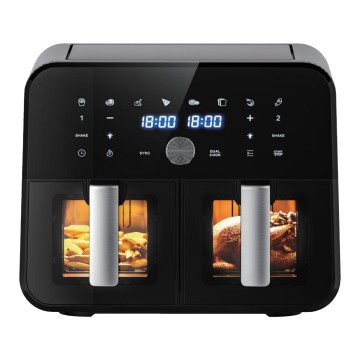
Korean dining emphasizes simultaneous presentation of multi-course Banchan, mains, and grilled components. Our 9L dual-independent chamber air fryers feature SYNC-finish scheduling algorithms, allowing operators to simultaneously roast marinated Bulgogi beef strips in basket A and crispy Kimchi jeon wedges in basket B to finish at the exact same second.
Rooted in Zhongshan — known as the "Home Appliance Capital of China" — Zhongshan Zhenmei Electric Appliance Co., Ltd. has been driven by the spirit of "Continuous Improvement and Unceasing Innovation" since its establishment. We specialize in the small household appliance industry, and with outstanding manufacturing capabilities and forward-looking market insight, we have grown from a budding enterprise into a trusted global supply chain partner.
The company was officially established in Zhongshan, focusing on the R&D and manufacturing of small household appliances. Starting mainly with OEM production, we specialized in basic product categories such as electric kettles and rice cookers, and set up our first standardized production line.
We introduced advanced quality management systems and obtained mandatory CCC certification for our products. Thanks to consistent product quality and a commitment to integrity, we gained the long-term trust of our first key clients, laying a solid foundation for the company’s growth.
To meet growing market demand, the company moved to a larger industrial park, expanded to 8 production lines, and introduced automated injection molding machines and testing equipment. Annual production capacity doubled as a result.
We established an independent R&D department and began expanding into a more diverse product portfolio. The successful launch of pressure cookers and blenders marked a strategic shift from single-category OEM production to multi-category integrated development.
We increased investment in product technology R&D and obtained multiple utility model patents and design patents. Breakthroughs were made in energy efficiency, safety, and smart features — some products incorporated intelligent temperature control and timer functions.
We launched the "Smart Manufacturing" upgrade initiative, implementing ERP and MES systems to digitalize production processes. This significantly improved operational efficiency and product consistency. The same year, our ODM business model matured, allowing us to offer one-stop solutions from market research and industrial design to manufacturing.
In response to the national "Dual Carbon" goals, we adopted the Green Factory concept, optimized production processes to reduce energy consumption, and developed a series of energy-efficient and eco-friendly small appliances.
We focused on the healthy living and smart kitchen sectors, launching multiple hit products such as air fryers and high-speed blenders. By establishing in-depth partnerships with leading e-commerce platforms and offline distributors, we continued to expand our market share and enhance brand influence.
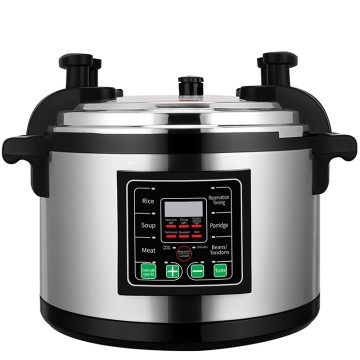
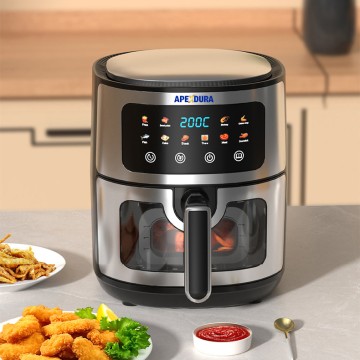
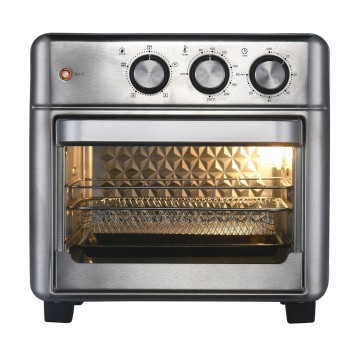
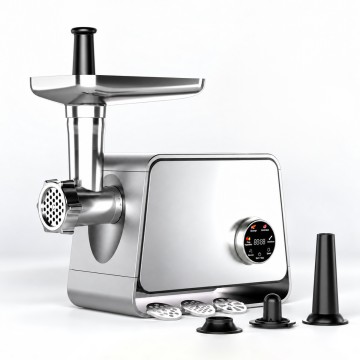
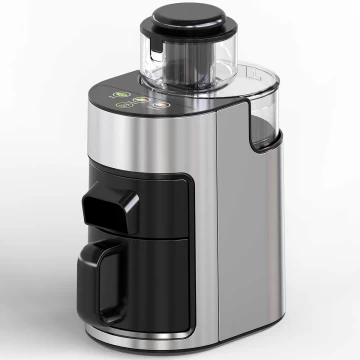
Explore our complete production matrix: from high-volume commercial electric pressure cookers to dual-basket smart air fryers and precision meat processors, ready for customized private labeling.
Direct oceanic shipping links between Guangdong's Greater Bay Area ports and South Korean entry points (Busan, Incheon, Pyeongtaek) guarantee unmatched delivery speed, cost stability, and supply resilience.
Situated in Zhongshan with seamless feeder logistics to Shenzhen (Yantian/Shekou) and Guangzhou (Nansha), shipments achieve rapid 4 to 6 day transit to Busan and Incheon ports. This enables South Korean retail brands to optimize just-in-time inventory turnover and respond quickly to seasonal promotions on Coupang, Naver SmartStore, and home shopping broadcasts.
We provide full turnkey industrial design capabilities tailored to Korean minimalist aesthetic standards (sleek matte monochrome palettes, low-profile metallic accents). Our engineering team designs custom PCB assemblies with Korean language firmware, voice prompts, and Korean Food Research Institute cooking presets ready for out-of-the-box distribution.
Every batch destined for South Korea undergoes rigorous multi-stage validation: high-voltage breakdown resistance, temperature insulation testing, packaging drop tests for parcel delivery carriers (CJ Logistics, Hanjin), and real-time operational burning-in tests. Our digital ERP and MES traceability assure consistent quality across thousands of units.