Leave Your Message
Rooted in Zhongshan — known as the "Home Appliance Capital of China" — Zhongshan Zhenmei Electric Appliance Co., Ltd. has been driven by the spirit of "Continuous Improvement and Unceasing Innovation" since its establishment. We specialize in the small household appliance industry, and with outstanding manufacturing capabilities and forward-looking market insight, we have grown from a budding enterprise into a trusted partner in the sector. Every step we take reflects our dedication and remarkable achievements.
The company was officially established in Zhongshan, focusing on the R&D and manufacturing of small household appliances. Starting mainly with OEM production, we specialized in basic product categories such as electric kettles and rice cookers, and set up our first standardized production line.
We introduced advanced quality management systems and obtained mandatory CCC certification for our products. Thanks to consistent product quality and a commitment to integrity, we gained the long-term trust of our first key clients, laying a solid foundation for the company’s growth.
To meet growing market demand, the company moved to a larger industrial park, expanded to 8 production lines, and introduced automated injection molding machines and testing equipment. Annual production capacity doubled as a result.
We established an independent R&D department and began expanding into a more diverse product portfolio. The successful launch of pressure cookers and blenders marked a strategic shift from single-category OEM production to multi-category integrated development.
We increased investment in product technology R&D and obtained multiple utility model patents and design patents. Breakthroughs were made in energy efficiency, safety, and smart features — some products incorporated intelligent temperature control and timer functions.
We launched the "Smart Manufacturing" upgrade initiative, implementing ERP and MES systems to digitalize production processes. This significantly improved operational efficiency and product consistency. The same year, our ODM business model matured, allowing us to offer one-stop solutions from market research and industrial design to manufacturing.
In response to the national "Dual Carbon" goals, we adopted the Green Factory concept, optimized production processes to reduce energy consumption, and developed a series of energy-efficient and eco-friendly small appliances.
We focused on the healthy living and smart kitchen sectors, launching multiple hit products such as air fryers and high-speed blenders. By establishing in-depth partnerships with leading e-commerce platforms and offline distributors, we continued to expand our market share and enhance brand influence.
Standing at a new starting point, Zhenmei Electric will continue to adhere to the business philosophy: "Driven by Innovation, Sustained by Quality, Winning Markets with Service." We will keep increasing R&D investment, deepen our expertise in smart IoT appliances, and strive to become a globally trusted expert in smart small appliance manufacturing — intelligently creating more convenient, healthier, and better lives for millions of households.
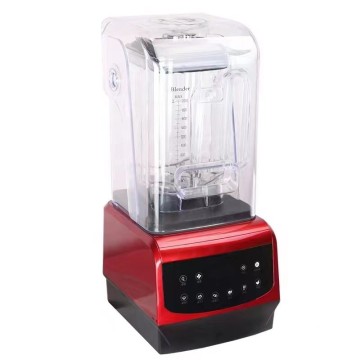
In contemporary restaurant kitchens, pre-processing tasks such as chopping, blending, pureeing, and mixing ingredients are crucial groundwork that directly impacts kitchen efficiency and food quality. Food blenders designed specifically for restaurant pre-processing are engineered to meet the intense demands of commercial use, offering power, durability, and versatility beyond regular household appliances.
Market Situation: The global food blender market for commercial kitchens is experiencing steady growth, driven by rising adoption in multi-outlet restaurant chains, caterers, hotels, and institutional food services. Increasing consumer preference for fresh, healthy foods and smoothies also contributes to demand for high-speed commercial blenders.
Industrial and Commercial Trends:
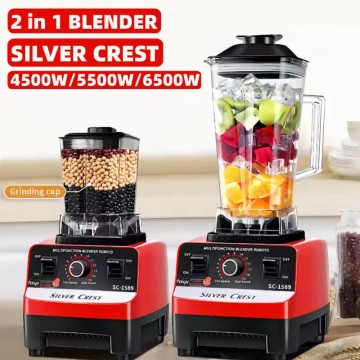
The choice of a suitable commercial blender in restaurant pre-processing directly correlates with operational throughput and product quality. High wattage motors, robust jar materials (like BPA-free Tritan), and variable speed controls allow chefs to customize texture for different dishes—be it silky smooth soups or chunky salsas.
While traditional usage for commercial blenders in restaurants focuses on ingredient pureeing and sauce making, emerging deeper applications are reshaping their industrial value:
With growing emphasis on automation and data analytics in commercial kitchens, the future of food blenders for restaurant pre-processing will likely integrate predictive maintenance alerts, smart usage analytics, and AI-assisted custom blending profiles. This tech-forward approach will elevate operational efficiency while empowering chefs with reproducible culinary precision.
Manufacturers focusing on modular designs permitting easy upgrades and component swaps will also gain market advantage, given rising attention to circular economy principles. Integration of blenders with connected kitchen ecosystems will set new standards in food processing across diverse restaurant formats worldwide.