Leave Your Message
In the rapidly evolving landscape of the global food industry, the demand for traditional ethnic staples has transitioned from domestic kitchens to high-traffic commercial environments. The Fufu Machine for fast food franchises represents a pivotal technological leap, bridging the gap between time-honored West African culinary traditions and the modern requirement for speed, hygiene, and consistency. Historically, fufu—a staple made from cassava, yams, or plantains—required intensive manual labor, involving heavy pounding that was both time-consuming and physically demanding. For a fast-food franchise, this traditional method was the primary bottleneck preventing scalability.
Today, the industry is witnessing a "Smart Kitchen" transformation. Modern fufu machines are no longer just simple blenders; they are sophisticated industrial processors designed to mimic the texture of hand-pounded fufu while adhering to international food safety standards. For franchises, this means the ability to serve hundreds of customers daily with zero variance in product quality. The commercialization of fufu production is not just about convenience—it is about the economic empowerment of African cuisine on the global stage.
Operating a successful franchise requires three core pillars: Consistency, Speed, and Labor Efficiency. A high-performance Fufu machine addresses all three. In a franchise model, the customer expects the same taste and texture in London as they do in Lagos. Manual preparation makes this impossible due to human fatigue and varying techniques.
Furthermore, the integration of AI-driven temperature control in high-end models ensures that the starch gelatinizes perfectly every time, preventing the "lumpiness" that often plagues amateur preparation. This level of technical precision is what allows a brand to scale from a single location to a global franchise network.
As we look toward 2025 and beyond, several key trends are shaping the future of Fufu Machine technology for franchises. We are moving beyond simple mechanical mixing into the era of "Intelligent Processing."
Energy Efficiency: With rising global energy costs, R&D is heavily focused on high-torque, low-consumption motors. Franchises operating dozens of machines across multiple locations can see significant utility savings by switching to eco-friendly models. Zhenmei Electric, for instance, has already begun implementing green manufacturing protocols to ensure that the production of these machines has a minimal carbon footprint.
Compact Modular Designs: As urban real estate prices rise, fast-food franchises are moving toward "Ghost Kitchens" and smaller footprints. The trend is moving toward compact, multi-functional machines that can handle fufu, nut grinding, and vegetable chopping in a single unit, maximizing every square inch of counter space.
Rooted in Zhongshan — known as the "Home Appliance Capital of China" — Zhongshan Zhenmei Electric Appliance Co., Ltd. has been driven by the spirit of "Continuous Improvement and Unceasing Innovation" since its establishment. We specialize in the small household appliance industry, and with outstanding manufacturing capabilities and forward-looking market insight, we have grown from a budding enterprise into a trusted partner in the sector.
Understanding where a Fufu machine for fast food franchises fits into your business model is crucial for maximizing ROI. Here are three deep-dive scenarios:
In a food court, speed is the only metric that matters during the 12:00 PM to 2:00 PM rush. A manual preparation process would lead to long queues and lost revenue. Our high-torque fufu machines allow for "On-Demand" production. Instead of making a large batch that might get cold, staff can produce fresh, steaming fufu in 90 seconds per order, ensuring maximum customer satisfaction and zero waste.
Ghost kitchens rely on optimization. Since there is no front-of-house, the focus is entirely on kitchen efficiency. A compact fufu processor allows a ghost kitchen to add African cuisine to their multi-brand portfolio without needing a large, traditional kitchen setup. It integrates seamlessly into a modern line-flow alongside fryers and ovens.
For franchises that hold contracts with universities, hospitals, or corporate offices, the volume is massive. In these scenarios, the machine's durability is tested. Our industrial-grade components are designed for 10+ hours of daily operation, with easy-clean features that allow for rapid turnover between different starch types (e.g., switching from yam fufu to semovita).
When selecting equipment for a franchise, the "Spec Sheet" tells the story of longevity. A Fufu machine for fast food franchises must possess specific engineering traits to survive the rigors of commercial use:
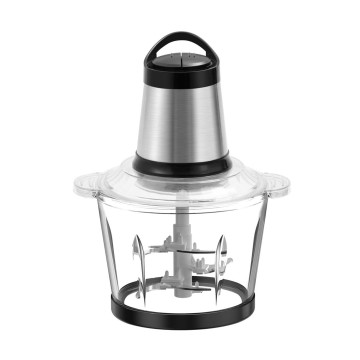
Our current lineup features Pure Copper Motors, which offer superior heat dissipation compared to aluminum-clad alternatives. This is critical for franchises in tropical climates where ambient kitchen temperatures can exceed 35°C. Additionally, the use of BPA-Free Glass or Food-Grade Stainless Steel bowls ensures that no chemical leaching occurs during the high-friction processing phase, keeping the food pure and safe.
Safety is another paramount concern. All our commercial-grade models include Double Safety Interlock Systems—the machine will not start unless the lid is perfectly sealed, and it automatically shuts off if it detects an abnormal load, protecting both the operator and the investment.
The journey of Zhongshan Zhenmei Electric—from a local manufacturer in 2005 to a global ODM/OEM powerhouse—mirrors the journey of the African food industry. Just as we have embraced "Smart Manufacturing" and "Green Factory" concepts, the fast-food franchise world is embracing automation to bring traditional flavors to the masses. Investing in a high-quality fufu machine for your fast food franchise is not merely an equipment purchase; it is a strategic decision to ensure the longevity, scalability, and profitability of your brand. As we continue to innovate in the smart kitchen sector, we invite franchise owners worldwide to join us in creating a more convenient, healthier, and technologically advanced future for global cuisine.
Driven by Innovation | Sustained by Quality | Winning Markets with Service