Leave Your Message
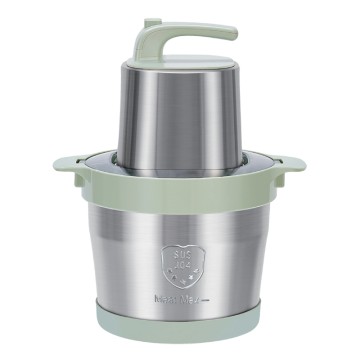
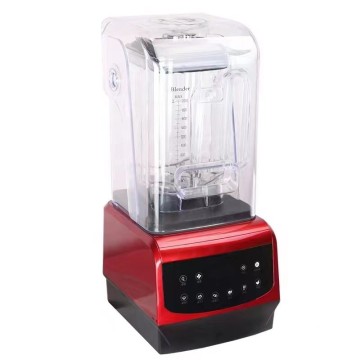
In the highly competitive world of fast-food franchises, consistency, speed, and quality control are the cornerstones of success. When a customer orders a signature burger, a chicken nugget, or a specialized sausage in New York, they expect the exact same texture, flavor, and juiciness as they would in Tokyo or London. Achieving this global uniformity relies heavily on the industrial and commercial equipment operating behind the scenes. At the heart of this operation is the commercial Meat Blender for Fast Food Franchises.
Unlike standard residential food processors, a commercial meat blender designed for franchise operations is a marvel of modern engineering. It is built to handle massive daily volumes, emulsify proteins to precise specifications, and maintain strict temperature controls to prevent bacterial growth and protein degradation. The current industrial landscape dictates that fast-food chains can no longer rely on manual mixing or sub-par grinding equipment. The integration of high-powered, durable meat blenders is non-negotiable for maintaining the supply chain integrity of meat patties, fillings, and plant-based alternatives.
The fast-food industry is experiencing a paradigm shift. Labor shortages and rising operational costs have forced franchises to rethink their kitchen and central commissary layouts. The modern fast-food ecosystem heavily utilizes a centralized processing model where industrial meat blenders process thousands of pounds of meat daily. These machines ensure that the fat-to-lean ratio is perfectly homogenous. If a franchise advertises an 80/20 beef patty, the meat blender is the critical mechanism that guarantees every single bite adheres to that exact ratio.
Furthermore, the industrial status of these machines has evolved from mere mechanical mixers to highly sophisticated processing units. Modern franchise meat blenders are constructed from high-grade, food-safe stainless steel (such as 304 or 316 grades) and ABS materials to withstand harsh chemical cleaning processes (CIP - Clean In Place). They are equipped with robust motors—often exceeding 1600W to 4500W—capable of powering through dense, semi-frozen meats without stalling, thereby preserving the cold chain and ensuring food safety compliance under stringent HACCP guidelines.
The application of a meat blender in a fast-food franchise extends far beyond simply grinding beef. The culinary versatility required by modern menus demands equipment that can adapt to various textures and ingredients. Let’s explore the deep application scenarios where these machines prove indispensable.
The secret to a perfect fast-food burger lies in the meat's texture. Meat blenders gently fold the ground meat, ensuring that the fat is evenly distributed without overworking the protein. Overworking leads to tough, chewy patties. Advanced blenders use precise blade geometries to achieve a loose, tender bite that retains maximum moisture during the high-heat searing process on commercial griddles.
Chicken nuggets and fast-food sausages require a completely different approach. Here, the meat blender functions as an emulsifier. It rapidly breaks down poultry or pork into a fine paste, seamlessly integrating water, spices, binders, and texturizers. This high-speed blending creates a stable meat emulsion that holds its shape during forming and deep-frying, resulting in the iconic crispy-outside, juicy-inside nugget.
With the exponential growth of vegan and vegetarian fast-food options, meat blenders have taken on a new role. Blending plant proteins (like soy, pea, or mung bean) with binding agents (like methylcellulose) and plant-based fats (like coconut oil) requires immense torque. The blender must replicate the mouthfeel of animal meat, a complex mechanical process that relies heavily on precise shear forces and temperature control.
Beyond the primary proteins, fast-food franchises utilize these robust blenders for creating proprietary sauces, marinades, and meat glazes. The ability to switch from processing heavy meats to blending a smooth, consistent marinade makes a high-wattage commercial blender an incredibly high-ROI asset in a centralized franchise prep kitchen.
Zhongshan Zhenmei Electrical Appliance Co., Ltd. is a premier OEM/ODM partner specializing in the manufacturing of kitchen appliances, including air fryers, electric pressure cookers, blenders, and more. With over 16 years of expertise, we transform concepts into high-quality, market-ready products for leading global fast-food brands and franchises.
Our strength lies in robust in-house manufacturing. Operating from a 40,000 sqm advanced facility, powered by 300+ dedicated professionals and 20+ R&D experts, we ensure precision and control at every stage of production.
Our massive 10,000+ units daily output reliably meets the demands of high-volume orders worldwide. We are committed to excellence, underpinned by a rigorous quality control system that guarantees the safety and reliability of every product.
We are the trusted, end-to-end solution for your franchise OEM/ODM needs. Choose us for innovation, scale, and reliability. Let's build your next success story together in the commercial kitchen space.







The future of fast-food meat processing is rapidly integrating with Artificial Intelligence (AI) and the Internet of Things (IoT). As franchises scale globally, the margin for error shrinks. The next generation of commercial meat blenders is not just about raw power; it is about smart, data-driven processing.
In a fast-food commissary, equipment downtime is catastrophic. Modern smart blenders are being equipped with AI sensors that monitor motor vibration, blade dullness, and electrical draw. These systems can predict when a bearing is about to fail or when a blade needs sharpening, alerting maintenance teams before a breakdown occurs. This AI-driven approach guarantees uninterrupted supply chains for franchise networks.
AI algorithms are being developed to visually and mechanically assess meat mixtures in real-time. By analyzing the torque required to turn the blades, the smart blender can determine the exact viscosity and fat distribution of the meat. If the mixture deviates from the franchise's strict algorithmic standards, the machine automatically adjusts its speed and blending time, ensuring 100% batch-to-batch consistency. This level of technological integration eliminates human error from the prep kitchen.
Another major trend is the push toward greener commercial kitchens. High-wattage blenders (like the 3000W/4500W models) consume significant electricity. Manufacturers are now utilizing AI-optimized variable frequency drives (VFDs) that adjust power consumption dynamically based on the load. If the meat is already partially emulsified, the motor reduces its energy draw, saving fast-food franchises thousands of dollars in annual utility costs while reducing their carbon footprint.
Investing in top-tier meat blenders directly impacts a franchise's bottom line. By reducing food waste through precise blending, minimizing labor hours spent on manual preparation, and ensuring a uniform product that drives customer retention, the Return on Investment (ROI) is realized rapidly. Furthermore, utilizing OEM/ODM partners with high-volume manufacturing capabilities ensures that franchises can procure these advanced machines at scale, outfitting hundreds of locations simultaneously without compromising on quality.
In conclusion, the meat blender is the unsung hero of the fast-food franchise industry. From grinding standard beef to emulsifying complex plant-based proteins, its role is foundational. As AI and smart technology continue to permeate commercial kitchens, these machines will only become more efficient, reliable, and integral to global food service operations.