




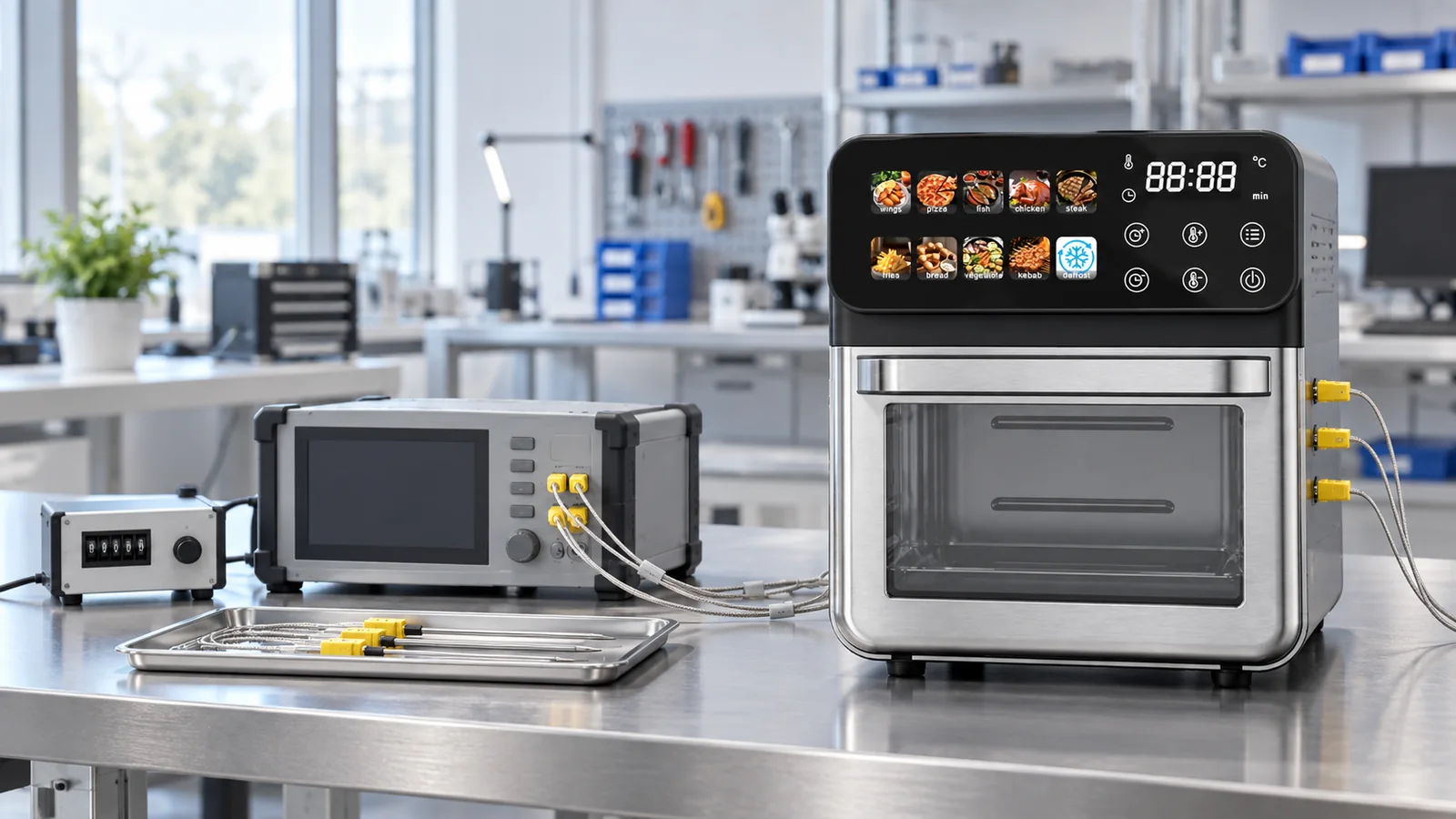
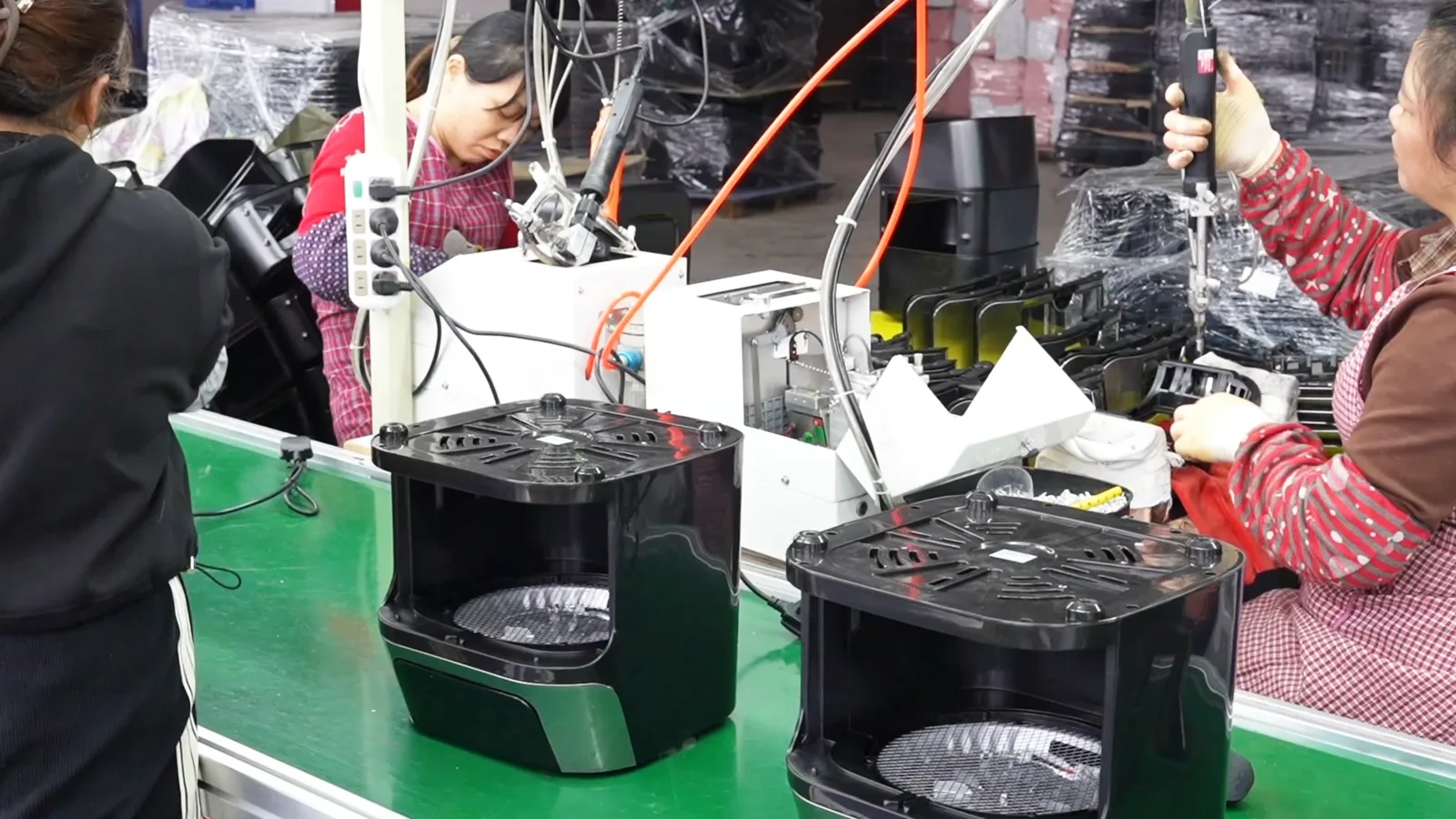

Electric Pressure Cooker OEM Sourcing Guide: Safety, Specs and Compliance
A pressure cooker that fails under pressure can cause severe burns, product recalls, and irreversible brand damage. Unlike blenders or air fryers, electric pressure cookers operate at 70-100 kPa above atmospheric pressure — every seal, valve, and lid lock is a safety-critical component. This guide walks you through the specifications, safety features, compliance requirements, and supplier verification steps that separate a safe private label pressure cooker from a liability waiting to happen.
Key Takeaways
- Safety is the #1 sourcing criterion. Pressure release valve, lid safety lock, and thermal cutoff must all be verified with test reports — not just marketing claims.
- Inner pot material defines the price tier. Non-stick aluminum (budget), stainless steel (mid-range), ceramic coating (premium) — each has different durability and food-contact compliance needs.
- Capacity drives retail positioning. 3L for singles, 5-6L for families, 8L for commercial or large households — confirm the actual usable capacity, not the total pot volume.
- Pressure cookers need extra packaging. The inner pot is heavy and fragile; double-wall cartons and custom foam are mandatory, not optional.
- Ask for 10,000+ cycle test data. A pressure cooker should survive 10,000 pressurize/depressurize cycles without seal failure or lid lock degradation.
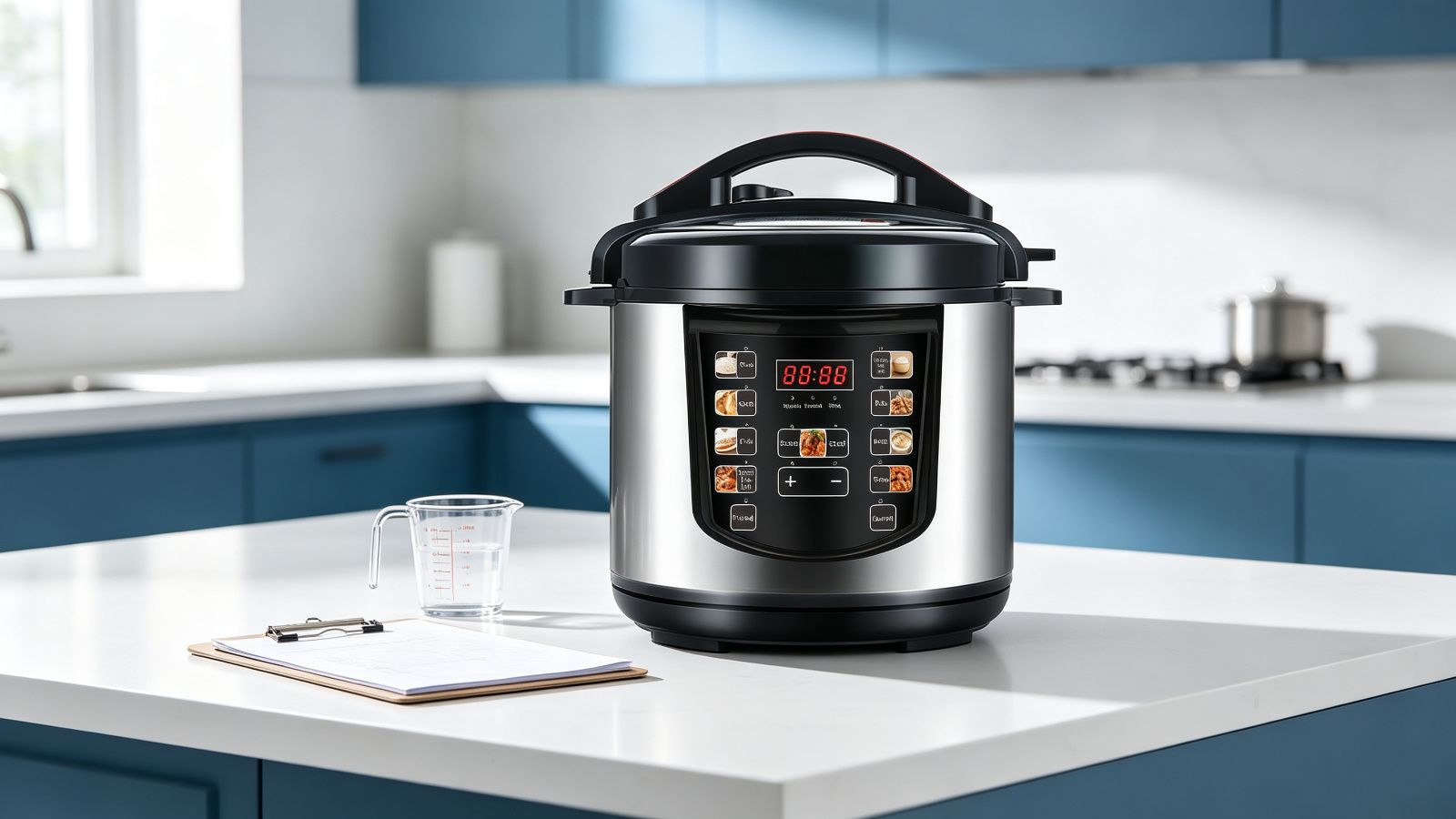
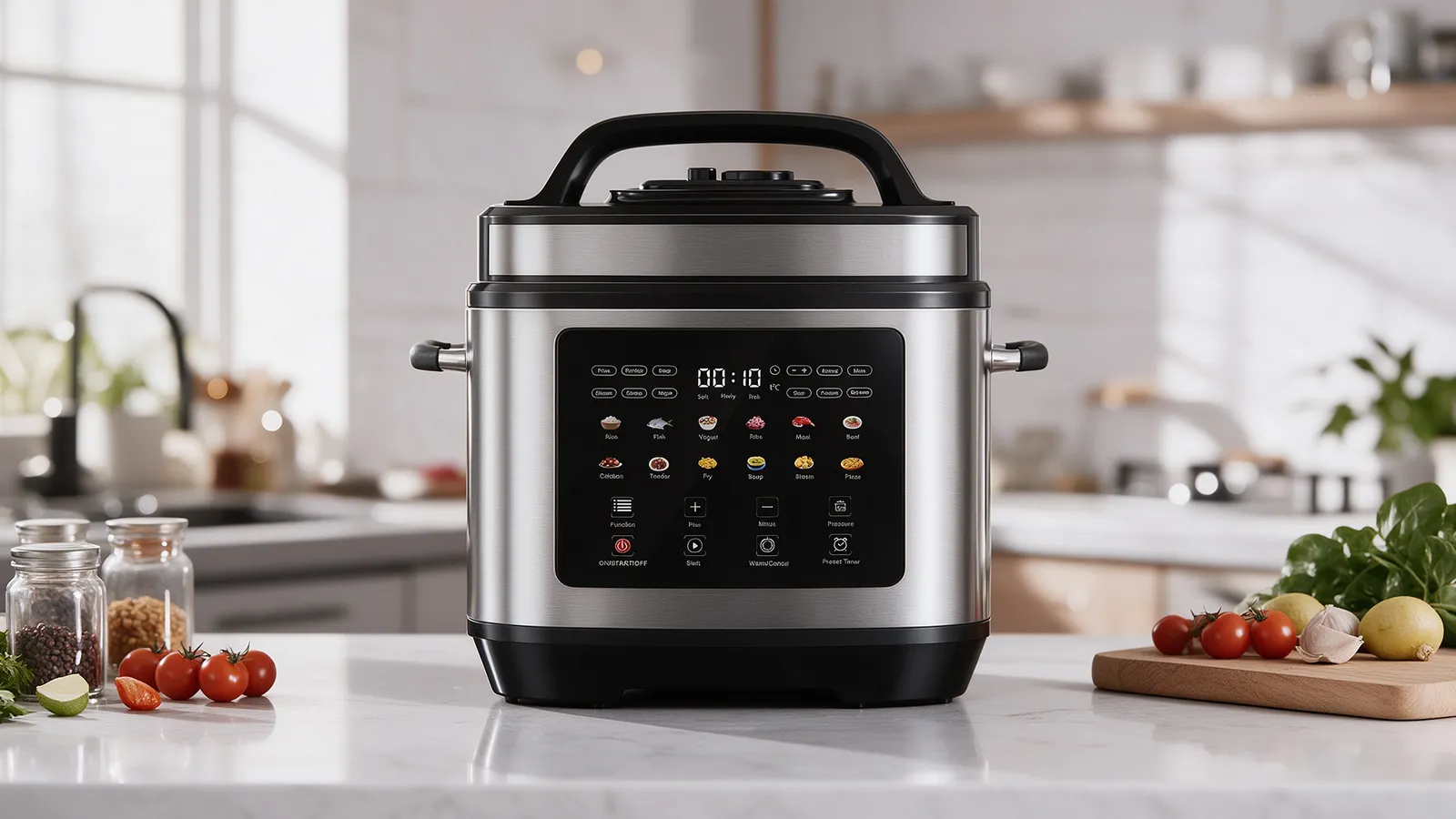
Electric pressure cookers operate at 70-100 kPa — every seal and valve is safety-critical.
How to Choose the Right Pressure Cooker Specs for Your Market
Before contacting suppliers, define your target customer and price tier. Electric pressure cookers (also called multicookers) range from budget 3L models under €30 to premium 8L stainless steel units over €120. If you are building a private label kitchen appliance range, our private label guide for Europe covers category selection and retail positioning.
| Specification | Budget Tier | Mid-Range | Premium |
|---|---|---|---|
| Capacity (usable) | 3L | 5L / 6L | 8L |
| Working pressure | 70 kPa | 70-80 kPa | 90-100 kPa |
| Inner pot | Aluminum non-stick | Stainless steel / non-stick | Stainless steel + ceramic |
| Preset programs | 6-8 | 10-15 | 15-20+ |
| Power | 700-900W | 1000-1200W | 1300-1600W |
| Lid type | Fixed lid | Removable lid | Removable + auto-lock |
| Typical retail price | €25-40 | €50-80 | €90-150 |
Note: "Total capacity" and "usable capacity" are different. A 6L pot may only hold 4L of liquid safely (2/3 max fill rule for pressure cooking). Always confirm both numbers with the supplier and print the usable capacity on the packaging.
Safety Features Every Pressure Cooker Must Have
Pressure cookers are one of the few kitchen appliances where a component failure can cause physical injury. Verify these safety features on every sample and require test reports:
| Safety Feature | What to Verify | Test Standard |
|---|---|---|
| Pressure release valve | Must release at rated pressure +10%; must not clog with food particles | EN 60335-2-15 Clause 22 |
| Lid safety lock | Lid cannot open while pressurized; lock engages automatically | EN 60335-2-15 Clause 22 |
| Thermal cutoff | Non-resettable fuse cuts power at 150-180°C if thermostat fails | EN 60335-1 Clause 24 |
| Pressure limiter | Secondary pressure relief if primary valve fails | EN 60335-2-15 |
| Sealing ring | Food-grade silicone; no deformation after 1,000 cycles | EC 1935/2004 + migration test |
| Anti-block shield | Prevents food from blocking the pressure valve | Visual + function test |
| Dry boil protection | Cuts power if pot is empty or water boils dry | EN 60335-2-15 |
| Handle temperature | Handle stays under 45°C during pressure cooking | EN 60335-1 Clause 11 |
Never accept a supplier that says "we have CE certification" without showing the actual test report for EN 60335-2-15. Our CE marking documentation checklist lists every document you should request before placing an order.
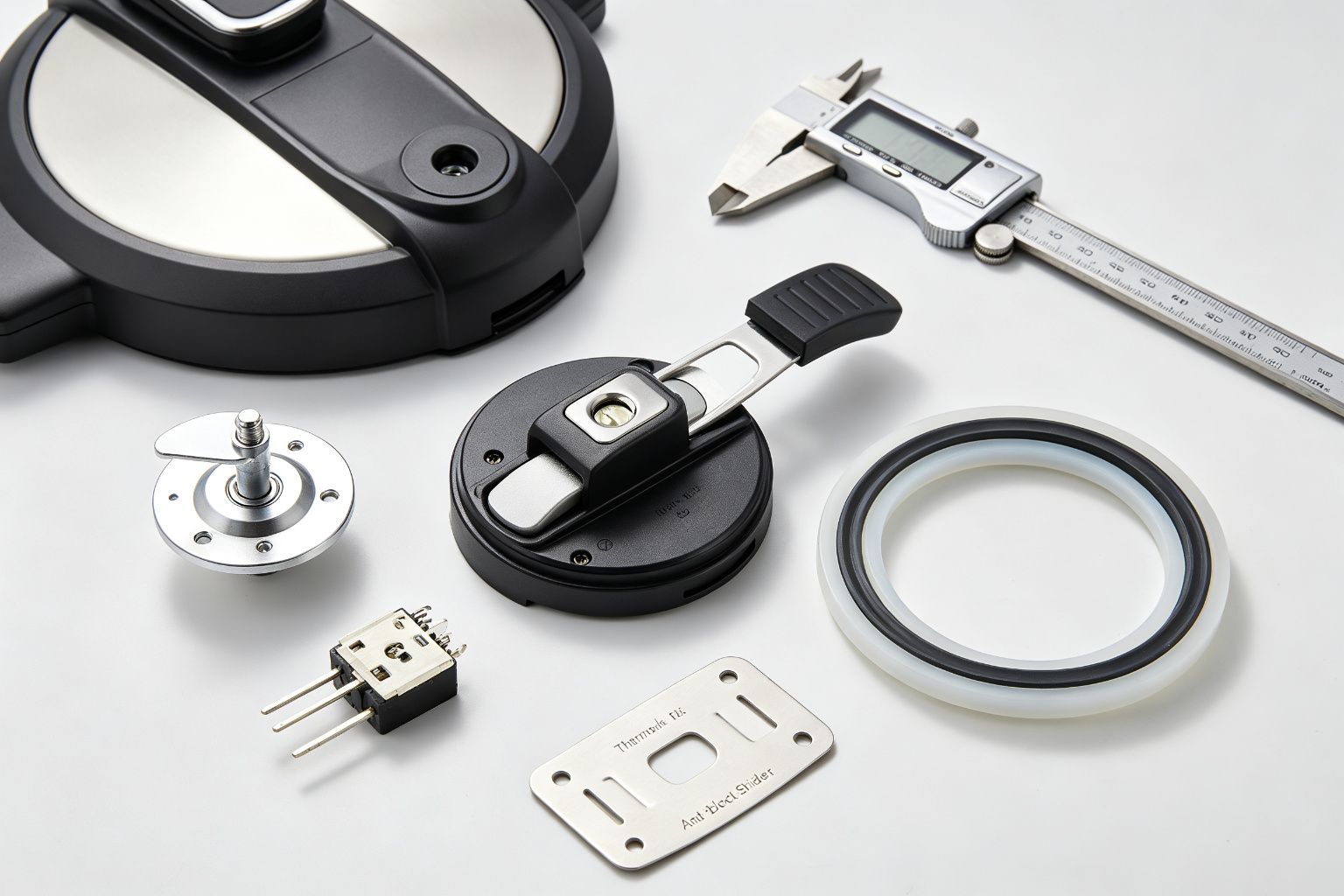
The pressure valve, lid lock, and sealing ring are the three most safety-critical components.
Inner Pot Materials and Food-Contact Compliance
The inner pot is the part that touches food at high temperature and pressure. Material choice affects cooking performance, durability, and compliance.
| Material | Pros | Cons | Compliance Note |
|---|---|---|---|
| Aluminum non-stick | Low cost, even heating, non-stick surface | Coating scratches after 6-12 months; not dishwasher safe | Coating must pass migration test per EC 1935/2004 |
| Stainless steel (304) | Durable, dishwasher safe, no coating wear | Food can stick; heavier; higher cost | Must confirm 304 grade (18/8); LFGB for Germany |
| Ceramic coated | Non-stick without PTFE; premium feel | Coating can chip; higher cost | Ceramic coating must pass heavy metal migration test |
| Non-stick + stainless steel combo | Best of both; two pots included | Highest cost; more packaging space | Both pots need separate food-contact declarations |
For the EU market, every food-contact part (inner pot, sealing ring, steam basket, measuring cup) must have a food contact declaration per Regulation (EC) 1935/2004. For Germany, request LFGB compliance documentation. For plastic parts (steam basket, measuring cup), request specific migration test reports — a generic "food grade" claim is not sufficient for EU market surveillance.
Quality Testing: What to Require Before Mass Production
Pressure cookers fail most often at the sealing ring, lid lock, and pressure valve. Require these test results from your supplier:
- Pressure cycle test: 10,000 pressurize/depressurize cycles with no seal failure, lid lock degradation, or valve sticking.
- Thermal shock test: Hot pot (120°C) rinsed with cold water — no cracking or warping of inner pot.
- Seal compression set: Silicone ring compressed at 150°C for 72 hours — must recover to original shape within 30 minutes.
- Valve clogging test: Run with starchy foods (rice, beans) — valve must not clog and pressure must release normally.
- Lid lock cycle test: 5,000 open/close cycles — lock must engage and disengage smoothly every time.
- Drop test: Packaged unit dropped from 60cm on all 6 faces — no damage to pot, lid, or control panel.
If the supplier cannot provide these test reports, request them as a condition of sample approval. A 10,000-cycle test on a few samples is far cheaper than a container of defective pressure cookers or a safety recall. Plan for AQL sampling on every first production batch, with special attention to safety components.
6 Pressure Cooker Sourcing Mistakes That Cause Recalls
1. Skipping the EN 60335-2-15 test report. A general CE certificate for "kitchen appliances" does not cover pressure cooker-specific safety requirements. Demand the specific standard test report.
2. Choosing the cheapest sealing ring. A €0.20 cheaper silicone ring can harden, crack, and cause pressure leaks after 3 months. Specify food-grade silicone with a compression set test.
3. Ignoring the lid lock mechanism. If the lid can be opened while pressurized, the product is a safety hazard. Test the lock manually on every sample.
4. Printing "6L" when usable capacity is 4L. Misleading capacity claims lead to returns and regulatory issues. Always print both total and usable capacity.
5. Single-wall packaging. The inner pot weighs 1-2kg and can crack the control panel in transit. Always require double-wall cartons + custom foam inserts.
6. No spare parts plan. Sealing rings wear out in 12-18 months. If customers cannot buy replacement rings, they will leave negative reviews and avoid your brand.
When a Simple 5L Model Beats a Feature-Loaded Multicooker
If you are new to pressure cooker sourcing, start with a simple 5L model with a stainless steel pot, 10-12 preset programs, and a removable lid. This configuration has the fewest failure points and the broadest market appeal. Feature-loaded models (Wi-Fi, app control, 20+ programs, automatic steam release) add complexity and potential failure points — save those for a second model once you have sales data and customer feedback.
Also, be realistic about safety claims. No pressure cooker is "explosion-proof" — do not let suppliers use this language in your marketing. The correct claim is "multiple safety protection systems" with specific features listed. And if you sell in Germany or Scandinavia, budget for stainless steel inner pots and LFGB compliance — customers in these markets expect higher food-contact standards.
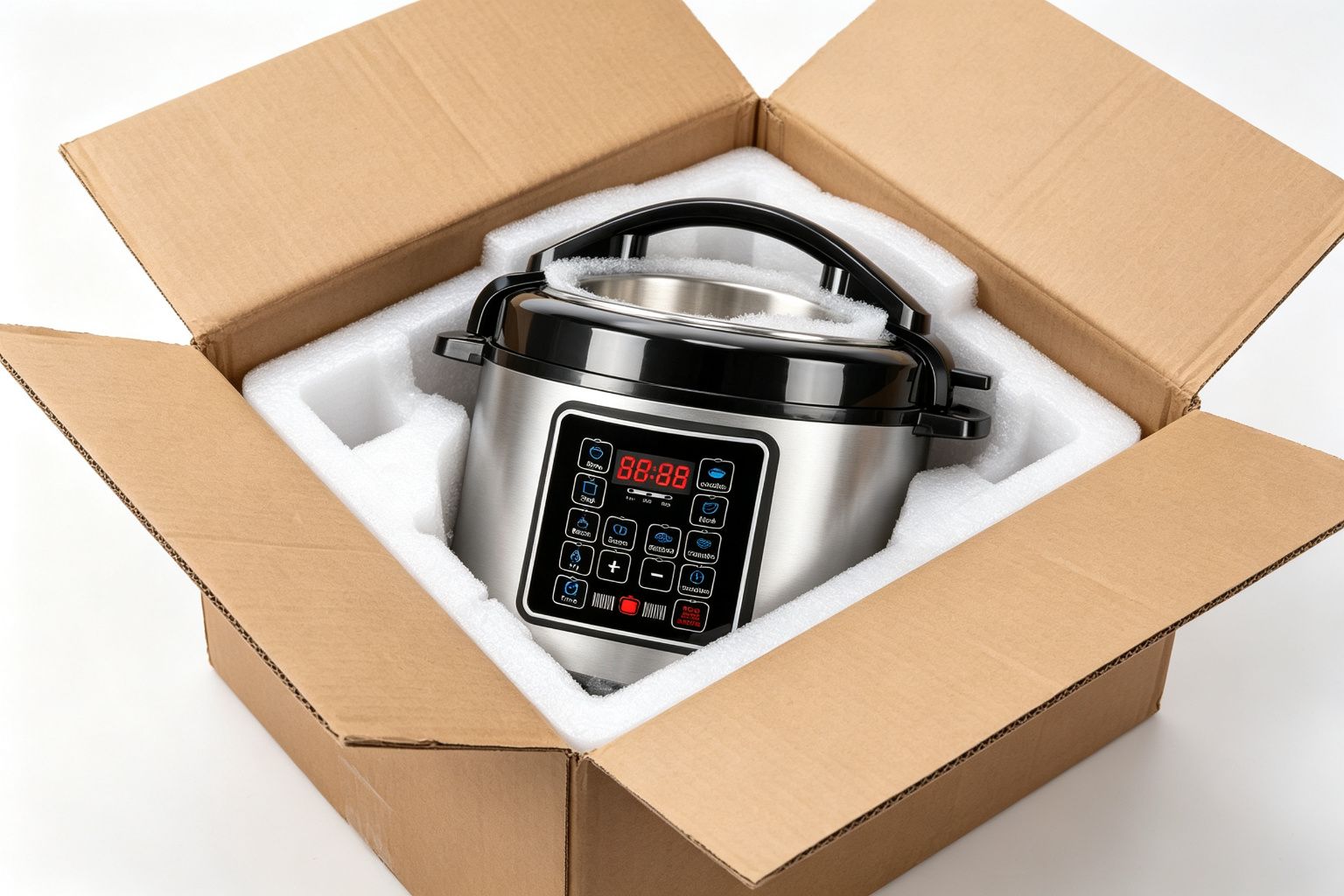
Double-wall cartons and custom foam inserts protect the heavy inner pot during transit.
Packaging and Retail Requirements
Pressure cookers are heavy (3-5kg per unit) and have fragile components (inner pot, glass lid if included, control panel). Packaging must protect the product through ocean freight and warehouse handling.
| Packaging Item | Requirement |
|---|---|
| Retail box | Double-wall corrugated (BC flute or heavier), full-color, product image, safety features highlighted |
| Foam inserts | EPS or EPE on top and bottom, custom fit for pot and base unit |
| Inner pot protection | Separate foam wrap or cardboard divider between pot and base unit |
| Accessories | Steam basket, measuring cup, rice spoon, recipe book — confirm all included |
| Manual languages | DE/FR/IT/ES/NL minimum for EU; include pressure cooking safety warnings |
| Rating label | Voltage, wattage, model, serial number, CE mark, capacity (total + usable) |
| Carton qty | Typically 2-4 units per export carton due to weight; confirm pallet configuration |
The 15-Point Electric Pressure Cooker Sourcing Checklist
- Working pressure confirmed (70/80/100 kPa) with test report
- Pressure release valve tested and certified
- Lid safety lock verified — cannot open while pressurized
- Thermal cutoff / fuse confirmed with temperature rating
- Secondary pressure relief (pressure limiter) present
- Sealing ring material confirmed (food-grade silicone) + migration test
- Inner pot material confirmed (aluminum / stainless / ceramic) + food contact declaration
- Total and usable capacity both confirmed and printed on packaging
- Power and voltage confirmed for target market (220-240V / 50Hz EU)
- EN 60335-1 + EN 60335-2-15 test reports provided
- EMC test report (EN 55014-1/2, EN 61000-3-2/3) provided
- RoHS declaration provided
- 10,000-cycle pressure test report reviewed
- Double-wall carton + foam inserts confirmed + drop test passed
- Spare parts available (sealing rings, valves, inner pots) for 5+ years
- Sample approved with your logo, color, pot material, and packaging
What to Do Before You Place Your First Pressure Cooker Order
Start with a clear RFQ data pack that includes your target capacity, pressure rating, pot material, and certification requirements. For broader kitchen appliance sourcing, our air fryer return risk checklist covers similar spec verification principles. APEXDURA offers OEM/ODM support for electric pressure cookers alongside our full kitchen appliance range.
To request a pressure cooker quotation or sample, request our pressure cooker spec comparison sheet — a side-by-side matrix of capacity, pressure, pot material, safety features, and compliance options.
Before your first pressure cooker production run: Run through the 15-point checklist above. Safety verification (valve, lid lock, thermal cutoff) is non-negotiable — do not skip test reports to save time. For APEXDURA pressure cooker projects, request the spec comparison sheet here and we will send it within one business day.
Limitations and Update Note
This guide reflects standard electric pressure cooker sourcing practices for the European market as of September 2026. Safety standards (EN 60335-2-15) and food-contact regulations (EC 1935/2004) may be updated; always verify the current standard edition with your compliance team or a notified body. Certification coverage (CE, RoHS, LFGB) applies by model and where applicable; specific model certification must be confirmed at the RFQ stage. Technical specifications are general ranges and may vary by manufacturer. This article is for informational purposes and does not constitute legal or safety advice. For pressure cooker safety certification, consult a qualified testing lab or notified body. Last reviewed: September 7, 2026.