





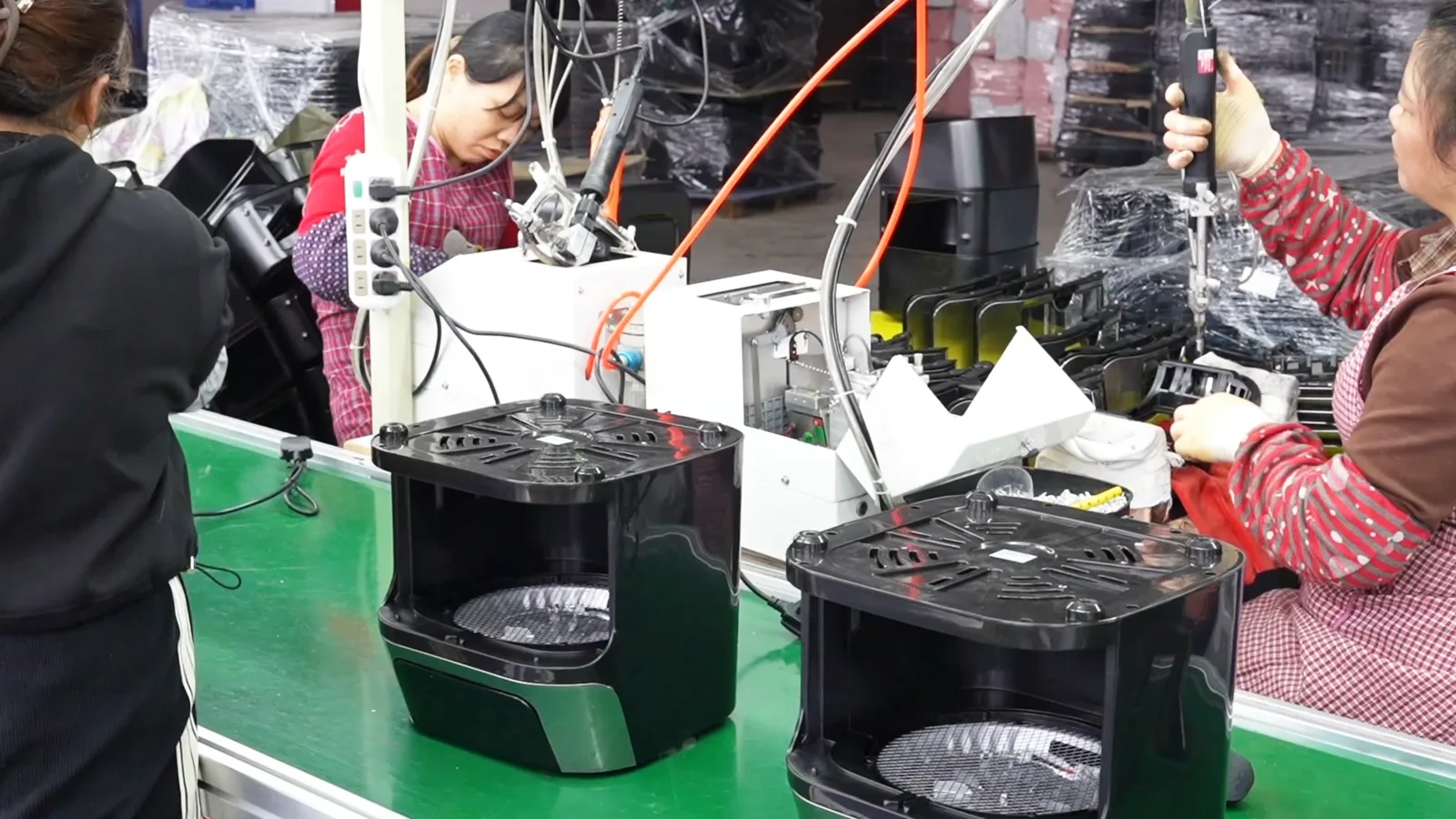

Spare Parts and After-Sales Planning for Private Label Kitchen Appliances
A private label air fryer that breaks after 8 months is a customer service nightmare if you have no replacement heating element or control panel to send. Customers who cannot get spare parts leave 1-star reviews, file chargebacks, and tell their retailer never to stock your brand again. Spare parts planning is not an afterthought — it is a sourcing decision you must make before the first production order, because the supplier may discontinue components or raise MOQs after mass production ends.
Key Takeaways
- Order spare parts with the first production run. Waiting until customers need them means facing higher MOQs, longer lead times, or discontinued components.
- Focus on wear parts first. Seals, blades, filters, carbon brushes, fuses, and control panels fail most often — not the motor or housing.
- Budget 3-5% of unit cost for spare parts inventory. This covers typical warranty replacement rates for kitchen appliances.
- Create separate spare SKUs and barcodes. Spare parts need their own product codes, packaging, and retail listings — they cannot share the main product SKU.
- Negotiate spare parts supply for 5-7 years. European customers expect spare parts availability for the product's expected lifetime.
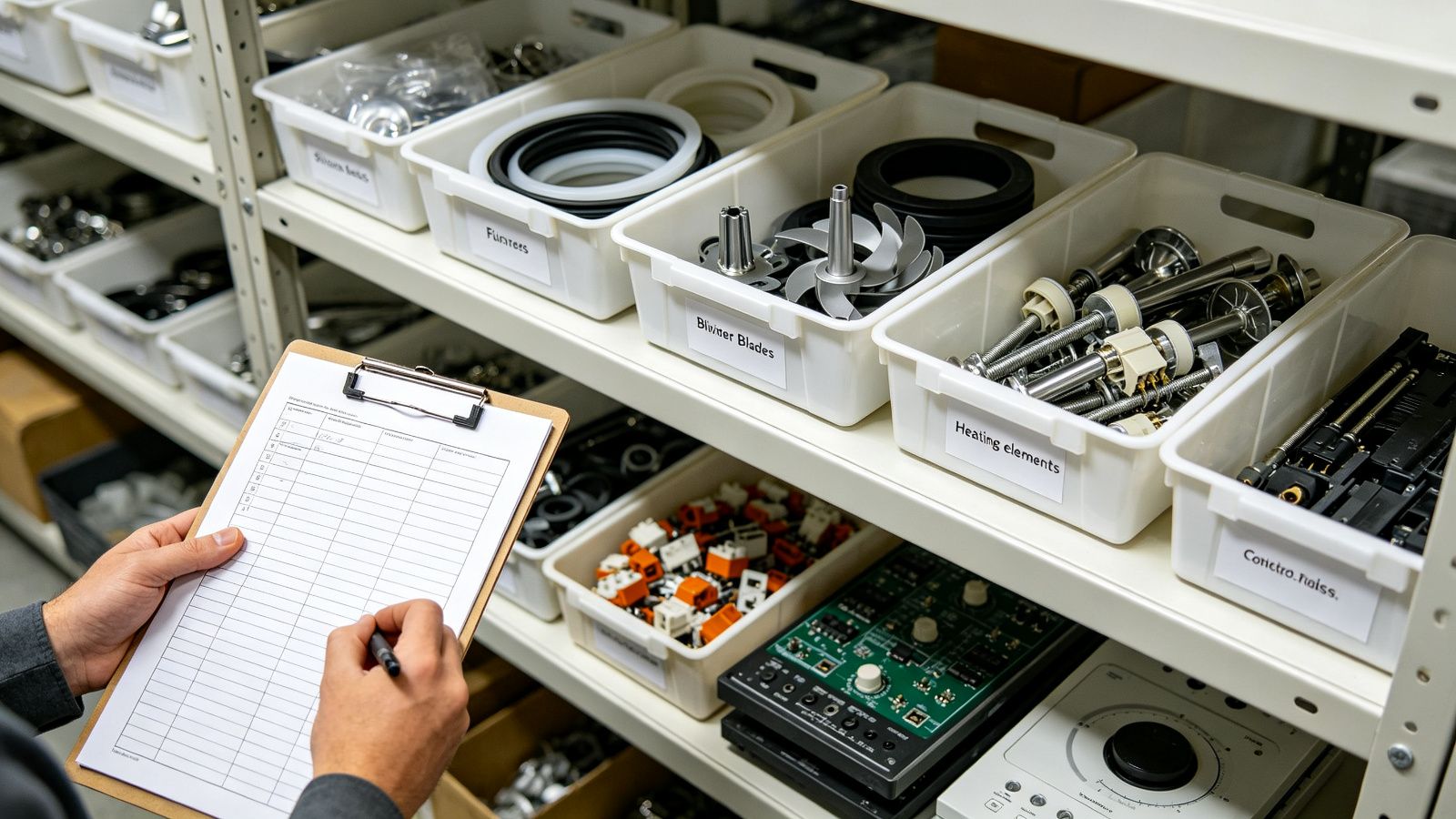
A structured spare parts plan prevents stockouts and protects your brand reputation.
Which Kitchen Appliance Parts Wear Out First
Not every component needs a spare parts stock. Focus on wear parts — components that degrade through normal use and are likely to fail within the warranty period. If you are building a private label range, our private label guide for Europe covers category selection and retail positioning alongside after-sales considerations.
| Appliance | High-Failure Wear Parts | Typical Lifespan | Spare Priority |
|---|---|---|---|
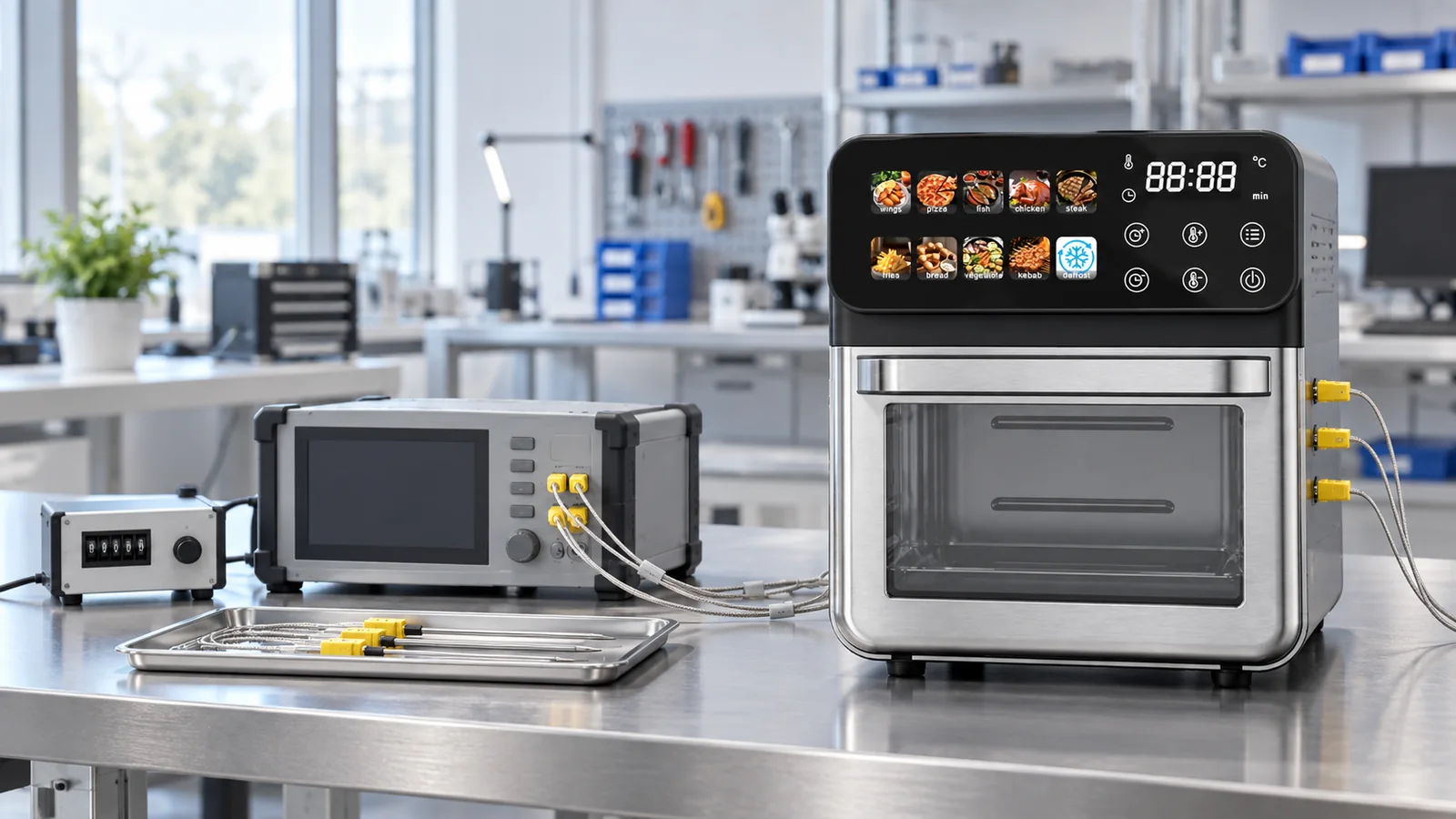
| Air Fryer | Heating element, fan motor, basket coating, control panel, thermal fuse | 12-24 months | Critical |
| Blender | Blade assembly, sealing ring, jar gasket, carbon brushes, drive coupling | 6-18 months | Critical |
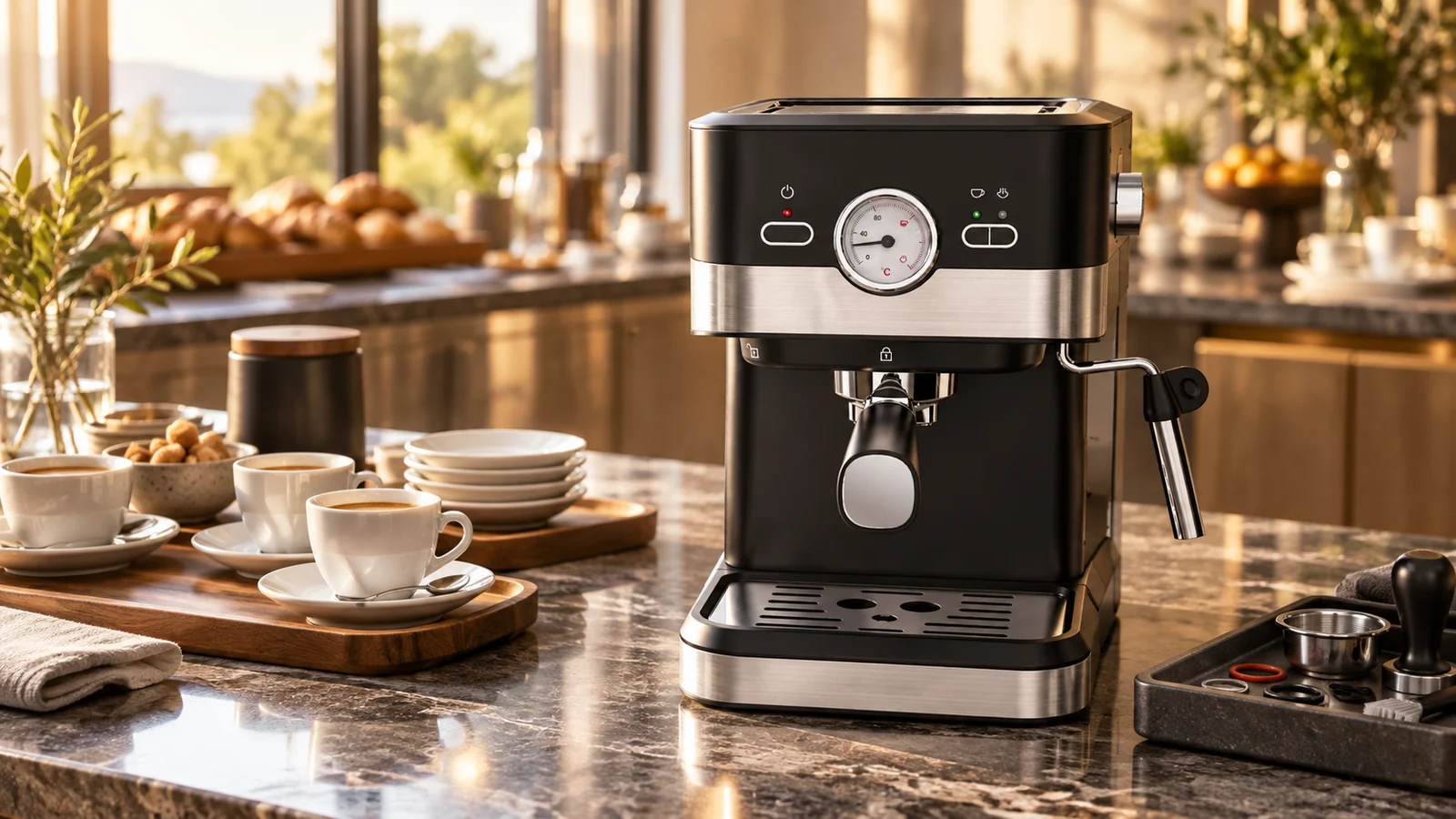
| Coffee Machine | Water pump, silicone tubes, filter basket, O-rings, descaling valve | 12-24 months | High |
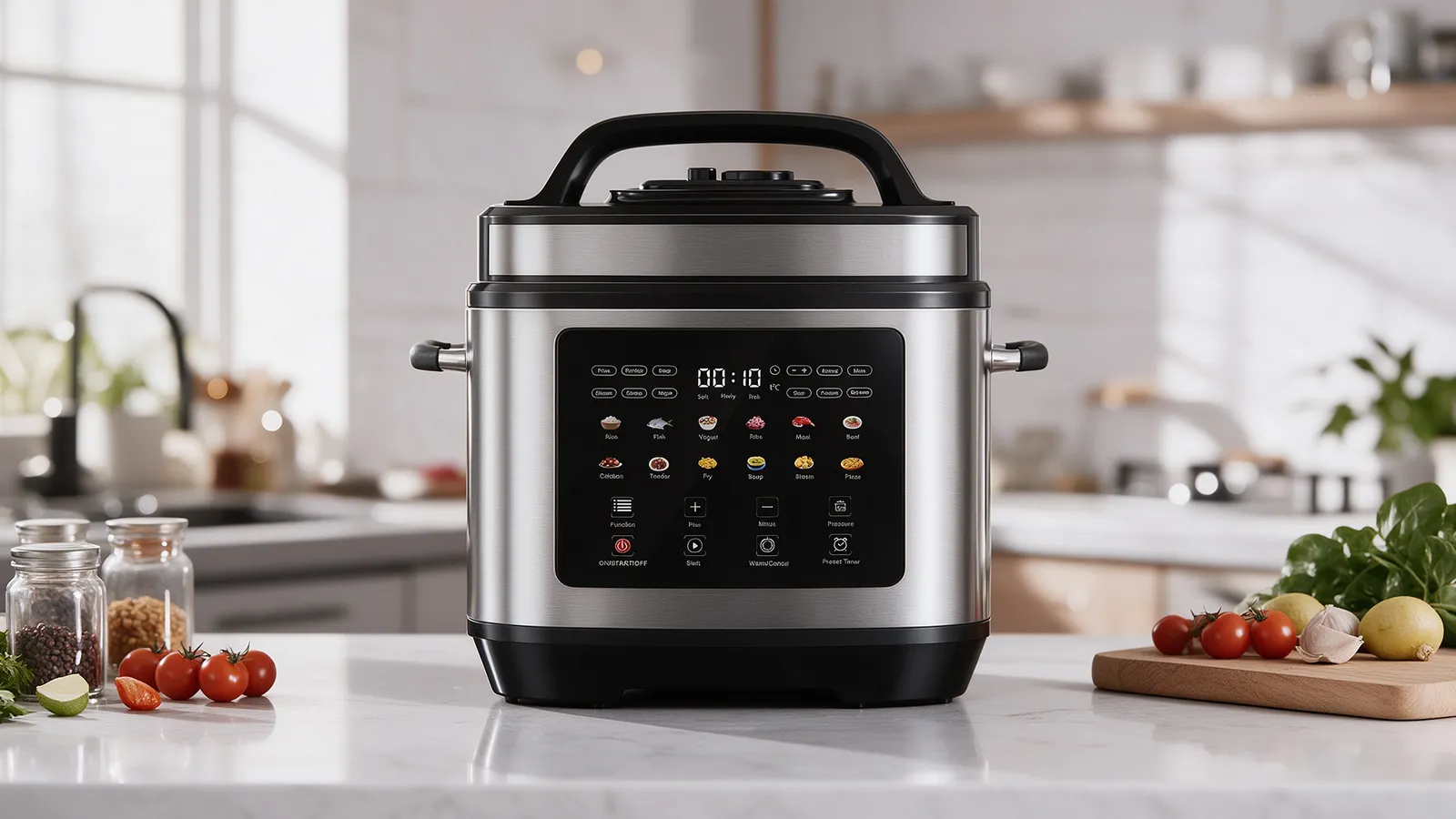
| Electric Pressure Cooker | Silicone sealing ring, pressure valve, anti-block shield, inner pot coating | 12-18 months | Critical |
| Microwave | Door switch, turntable motor, glass plate, waveguide cover | 24-36 months | Medium |
| Meat Grinder | Cutting blade, grinding plates, plastic gear, pusher | 6-12 months | High |
| Juicer | Filter basket, silicone seal, feed chute, auger (masticating) | 12-18 months | High |
Rule of thumb: if a part touches food, rotates, heats, or seals, it will eventually need replacement. Structural parts (housing, base, handle) rarely fail and do not need spare stock unless the product has a known design defect.
How Much Spare Parts Inventory to Carry
The right spare parts quantity depends on your sales volume, warranty period, and expected failure rate. A common starting point for private label kitchen appliances:
| Spare Part Type | Recommended Stock Ratio | Example (1,000 units) |
|---|---|---|
| Critical wear parts (seals, blades, fuses) | 5-8% of unit volume | 50-80 pieces |
| High-failure parts (heating elements, pumps) | 2-3% of unit volume | 20-30 pieces |
| Medium-failure parts (control panels, motors) | 1-2% of unit volume | 10-20 pieces |
| Low-failure parts (housing, base) | 0.5% or on-demand | 5 pieces |
| Accessories (measuring cups, spoons) | 3-5% of unit volume | 30-50 pieces |
Adjust these ratios based on real failure data from your first 6 months of sales. If a particular seal fails at 10% instead of 5%, increase the next spare order. Track every warranty claim by part number and failure mode — this data is more valuable than any supplier estimate.
Spare Parts MOQ and Pricing Negotiation
Suppliers often charge higher unit prices for spare parts because they are produced in small quantities. Negotiate spare parts terms at the same time as the main product order — before you are locked in:
- Ask for spare parts pricing in the initial quotation. A supplier who cannot quote spare parts pricing may not support after-sales at all.
- Negotiate a spare parts MOQ cap. For example, "spare parts MOQ not to exceed 50 pieces per part number" — prevents the supplier from demanding 500 seals when you only need 50.
- Lock in spare parts pricing for 2-3 years. Component prices rise; a fixed spare parts price protects your warranty cost budget.
- Order spares with the first production run. Combining spares with the main order reduces per-unit cost and ensures availability.
- Confirm spare parts lead time. A 60-day lead time for a replacement heating element means 60 days of angry customers.
Include spare parts terms in your purchase contract or supply agreement. A verbal promise of "we can supply spares later" is not enforceable — get the pricing, MOQ, lead time, and supply duration in writing.
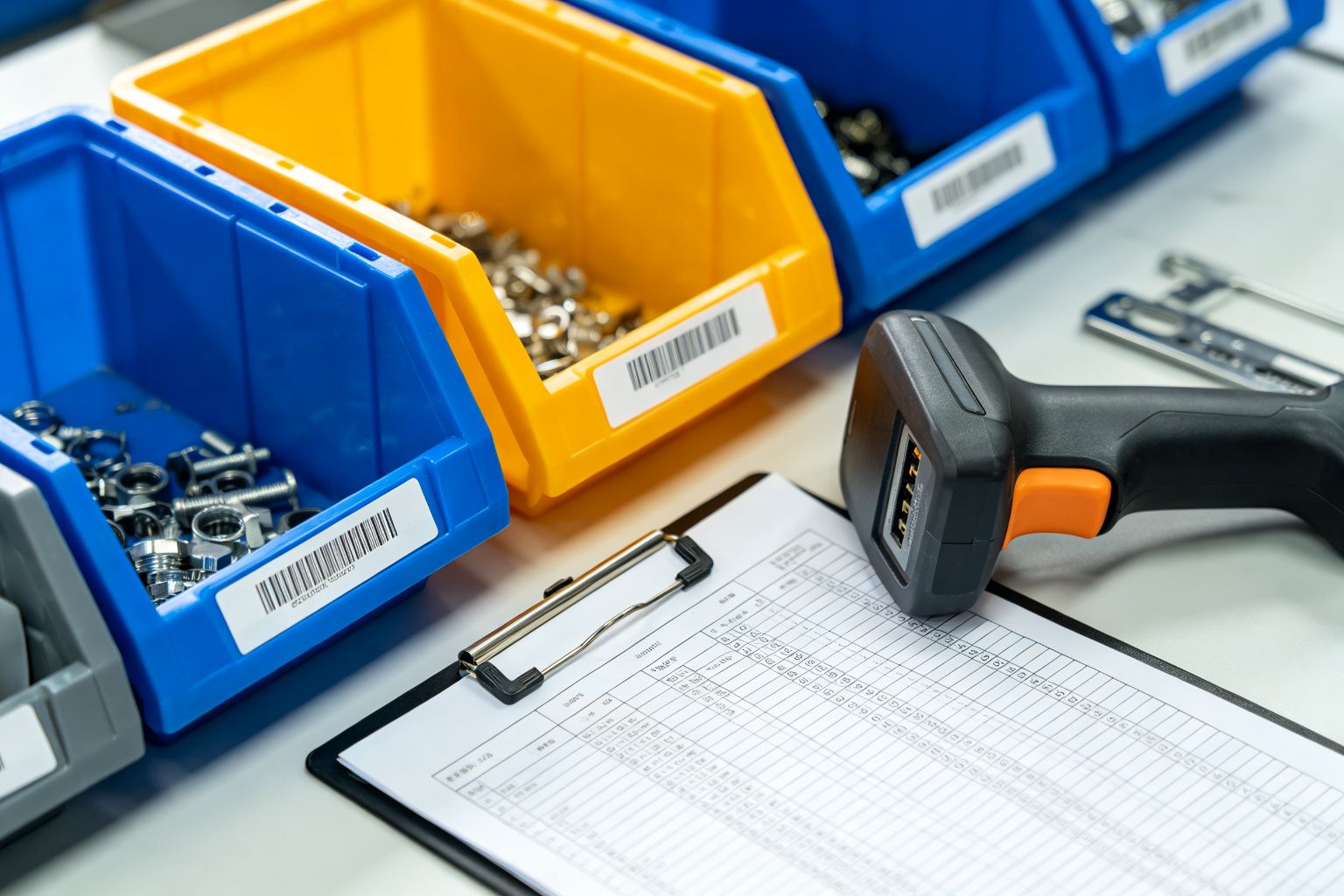
Each spare part needs its own SKU, barcode, and packaging — it cannot share the main product code.
Warranty Design: What to Cover and for How Long
Warranty terms directly affect your spare parts needs. A 2-year warranty requires more spare inventory than a 1-year warranty. Design your warranty around your product's expected failure profile:
| Warranty Element | Budget Option | Standard | Premium |
|---|---|---|---|
| Warranty period | 1 year | 2 years | 3 years |
| Coverage | Manufacturing defects only | Defects + wear parts (first year) | Defects + wear parts + accidental damage |
| Resolution method | Return to retailer | Spare part shipped to customer | On-site repair or advance replacement |
| Spare parts budget | 2-3% of revenue | 3-5% of revenue | 5-8% of revenue |
| Customer effort | High (ship product back) | Low (install part themselves) | Very low (we handle everything) |
For most private label brands, the "Standard" option (2-year warranty, spare parts shipped to customer) offers the best balance of cost and customer satisfaction. Shipping a €5 sealing ring to a customer is far cheaper than accepting a returned €50 appliance and paying for reverse logistics.
6 Spare Parts Mistakes That Destroy Brand Reputation
1. No spare parts plan at all. The most common mistake. You sell 5,000 air fryers, the heating elements start failing at month 10, and your supplier says "minimum order 1,000 pieces, 90-day lead time." Customers wait 3 months for repairs.
2. Spare parts share the main product SKU. Without separate spare SKUs and barcodes, you cannot track spare inventory, list spares for sale, or process warranty replacements efficiently.
3. Ignoring accessory replacement. Customers lose measuring cups, blender lids, and steam baskets. If you cannot sell these as accessories, customers buy from competitors or leave negative reviews.
4. No installation instructions for spare parts. A customer who receives a replacement blade but cannot install it will still return the product. Include simple installation guides or videos with every spare part.
5. Spare parts supply ends when production ends. If the supplier discontinues a model, you may be unable to get spares for units still under warranty. Negotiate a "last time buy" option before production ends.
6. Underestimating seal and gasket failure. Silicone seals harden and leak after 12-18 months, especially in pressure cookers and blenders. These are the #1 warranty claim — stock more than you think you need.
When a Simple Spare Parts Kit Beats a Full Service Network
If you are a new private label brand without an established service network, do not try to build one from day one. Instead, create a "spare parts kit" for each product: a pre-packaged set of the most likely failure parts (seal, fuse, blade, O-rings) that you can ship to customers within 48 hours. This costs a fraction of a service network and resolves 70-80% of warranty issues.
Be honest with customers about what your warranty covers. A 2-year warranty that says "we ship replacement parts within 48 hours, customer installs" is better than a 3-year warranty that says "mail the product back to us and wait 6 weeks." Customers value speed and clarity over theoretical coverage.
Also, consider selling spare parts and accessories as a revenue stream, not just a warranty cost. Replacement seals, extra blender jars, and additional air fryer baskets have healthy margins and increase customer lifetime value. List them on your website and Amazon alongside the main product.
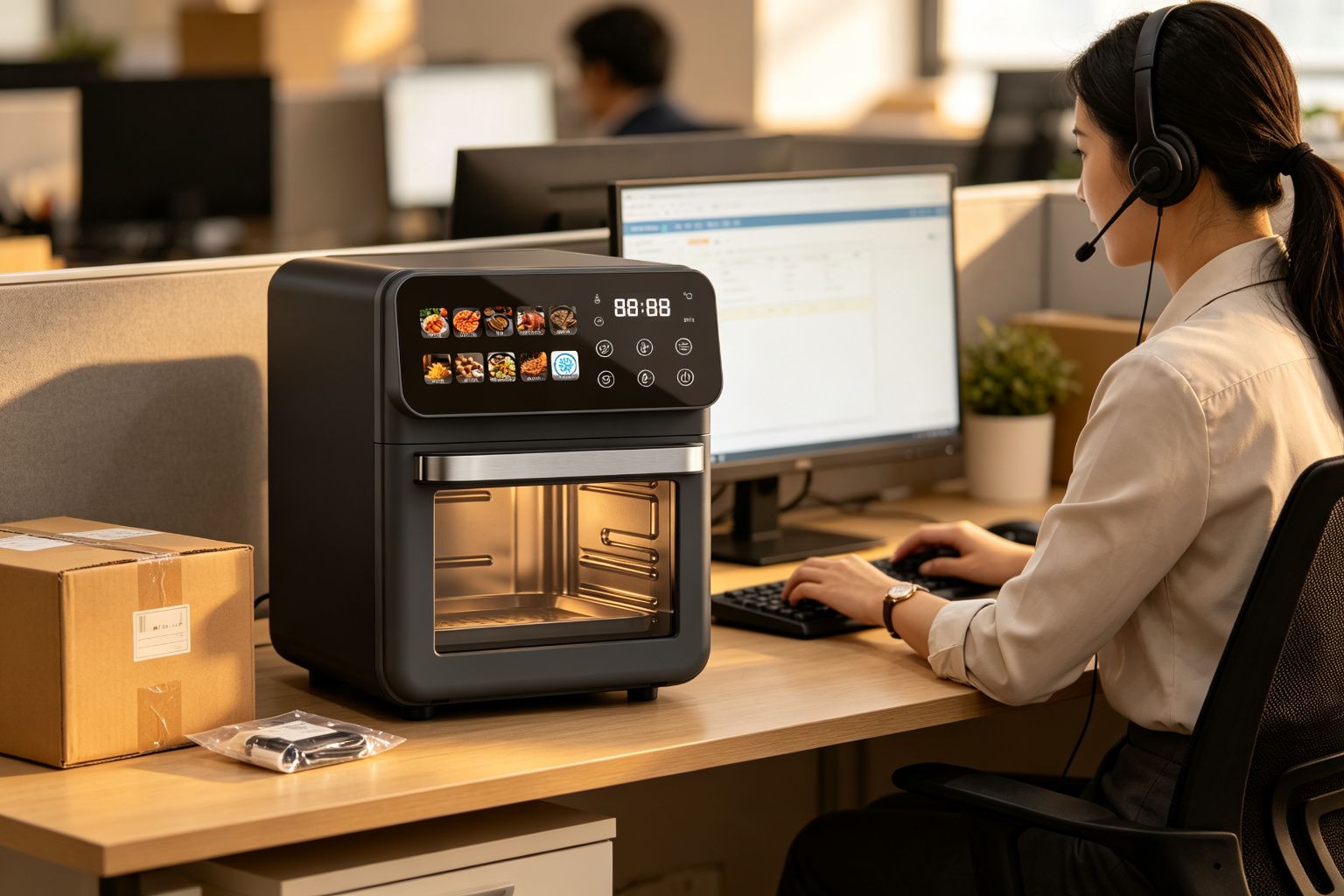
Shipping a €5 replacement part is far cheaper than accepting a returned €50 appliance.
Return Handling and Reverse Logistics
Even with a strong spare parts program, some products will need to be returned. Plan your return process before launch:
| Return Scenario | Recommended Handling | Cost Impact |
|---|---|---|
| Defective product within 30 days | Advance replacement: ship new unit, customer returns defective one | High (double shipping + restocking) |
| Defective product 31 days - 1 year | Ship spare part; customer installs or returns if unfixable | Low (part cost + shipping) |
| Wear part failure (seal, blade) | Ship replacement part; no return required | Very low (part cost only) |
| Customer changed mind (unopened) | Return to retailer or warehouse; restock fee | Medium (reverse shipping + inspection) |
| Customer damage (not warranty) | Offer spare part at cost; paid repair service | Neutral (customer pays) |
For returned defective products, do not throw them away. Salvage usable parts (motors, housings, control panels) for future repairs — a returned air fryer with a broken basket still has a perfectly good heating element and fan. Our air fryer return risk checklist covers spec verification that reduces returns in the first place.
Spare Parts Supply Duration and End-of-Life Planning
European consumers expect spare parts to be available for the product's expected lifetime. For kitchen appliances, this is typically 5-7 years from the date of purchase. Plan accordingly:
- Negotiate spare parts supply for 5+ years in your supply agreement. The supplier should commit to producing or sourcing spares for this period.
- Track component lifecycle. If a key component (e.g., a specific control panel IC) is nearing end-of-life, do a "last time buy" before it becomes unavailable.
- Plan for model discontinuation. When you stop selling a model, order a final batch of critical spares to cover remaining warranty periods.
- Maintain component traceability. Know which production batch used which components — this helps target spare parts for specific failure-prone batches. Our component traceability guide explains how to track components through production.
The 14-Point Spare Parts and After-Sales Checklist
- Wear parts identified for each product (seals, blades, filters, fuses)
- Spare parts pricing quoted by supplier (per part number)
- Spare parts MOQ negotiated and capped in writing
- Spare parts lead time confirmed (target: ≤30 days)
- Spare parts supply duration agreed (5+ years)
- Initial spare stock ordered with first production run
- Spare parts inventory ratios set (5-8% critical, 2-3% high, 1-2% medium)
- Separate spare SKUs and barcodes created for each part
- Spare parts packaging designed (retail-ready or plain for warranty)
- Warranty terms defined (period, coverage, resolution method)
- Warranty budget allocated (3-5% of revenue for 2-year warranty)
- Return handling process documented (by scenario)
- Installation guides/videos prepared for common spare parts
- End-of-life / last-time-buy plan in place
- Failure tracking system set up (by part number, batch, date)
What to Do Before Your First Production Order
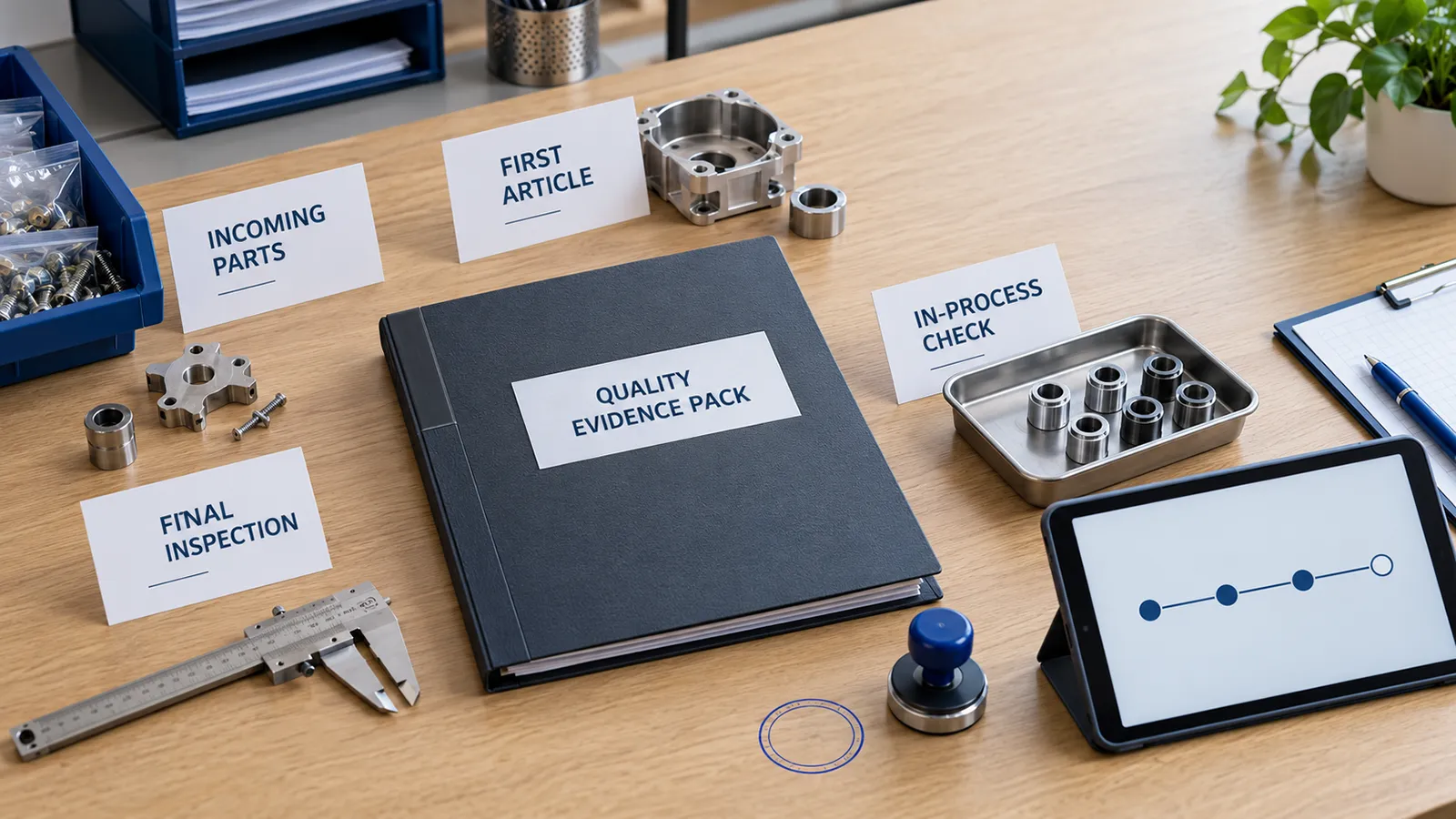
Add spare parts requirements to your RFQ data pack so every supplier quotes with after-sales support included. For quality verification, plan AQL sampling on both main production and spare parts batches. If you source from multiple suppliers, our second supplier strategy guide explains how to maintain spare parts consistency across suppliers.
APEXDURA offers spare parts support for all our kitchen appliance models, with dedicated spare SKUs and 5+ year supply commitments. To discuss after-sales planning for your private label range, explore our OEM/ODM capabilities or request our spare parts planning template — an Excel sheet with wear part lists, stock ratios, MOQ trackers, and warranty cost calculators.
Before your next production order: Add spare parts pricing, MOQ, and supply duration to your supplier contract. A 30-minute negotiation now prevents 3 months of customer complaints later. For APEXDURA projects, request the spare parts planning template here and we will send it within one business day.
Limitations and Update Note
This guide reflects standard spare parts and after-sales practices for private label kitchen appliances in the European market as of September 2026. Failure rates and wear part lifespans are industry estimates and may vary by product quality, usage patterns, and manufacturer. Warranty regulations differ by country — always verify local consumer protection laws (e.g., EU Consumer Rights Directive, UK Consumer Rights Act) with a legal advisor. Spare parts supply commitments are contractual and must be negotiated with each supplier. This article is for informational purposes and does not constitute legal or financial advice. Last reviewed: September 11, 2026.