





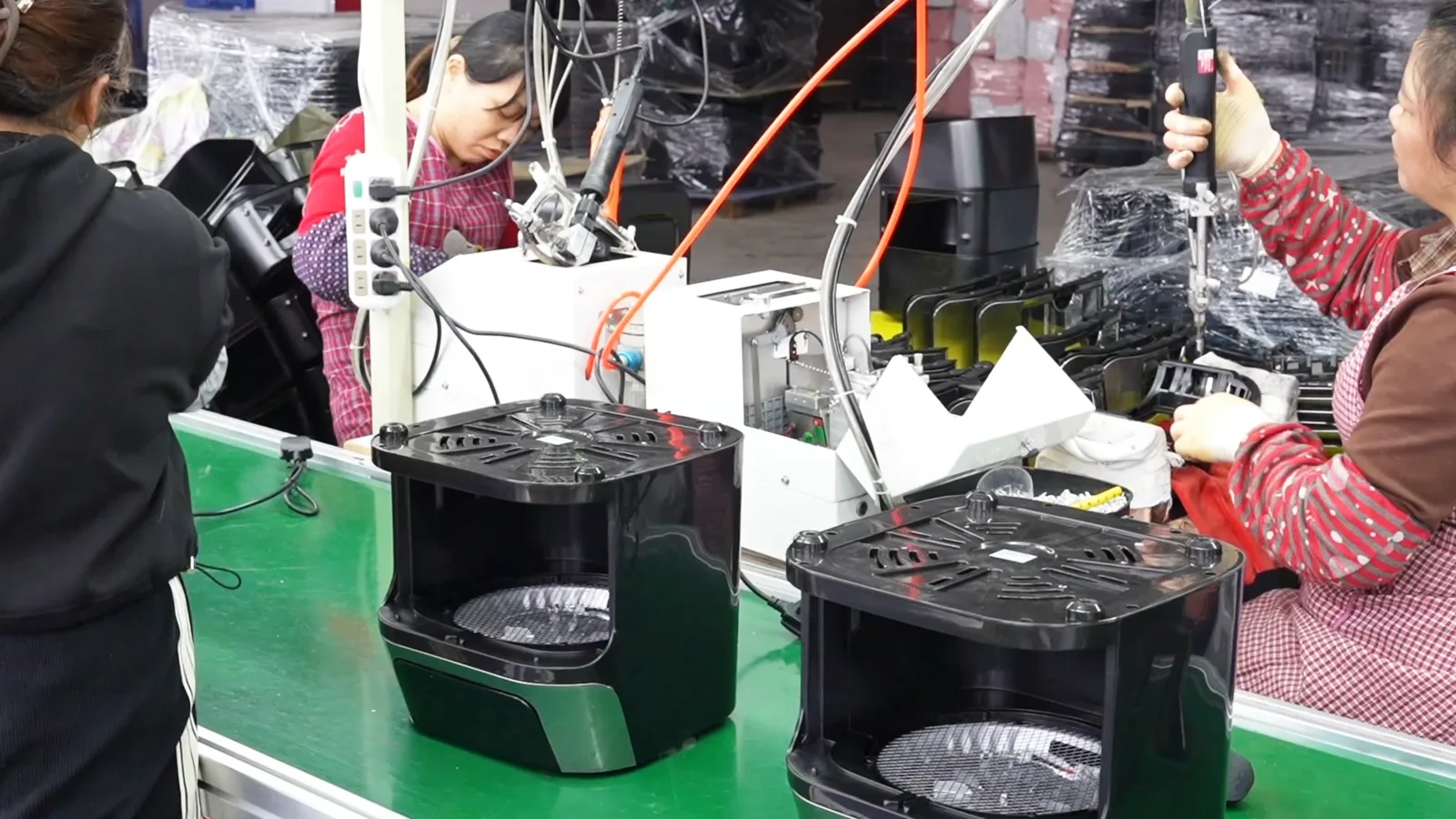

UKCA Compliance for Kitchen Appliances: Post-Brexit Requirements
A kitchen appliance shipment that arrives in the UK without UKCA marking can be held at customs, returned, or destroyed — and the importer is liable. Since the UK left the EU, CE marking alone no longer demonstrates compliance for the Great Britain market. This guide explains what UKCA requires, how it differs from CE, which standards apply to kitchen appliances, and the documentation you must prepare before your products reach UK ports.
Key Takeaways
- UKCA is mandatory for Great Britain (England, Scotland, Wales). CE marking alone is no longer sufficient for placing products on the GB market.
- Northern Ireland follows EU rules. CE marking (and CE+UKNI where applicable) is used in Northern Ireland, not UKCA.
- You need a UK Responsible Person. A manufacturer based outside the UK must appoint a UK-based responsible person for most regulated products.
- UK Declaration of Conformity replaces EU DoC for the UK market. The format and signatory requirements differ from the EU Declaration of Conformity.
- Most kitchen appliances can self-certify UKCA. Unlike some medical or PPE products, electrical appliances typically do not require UK Approved Body involvement — but you must still maintain full technical documentation.
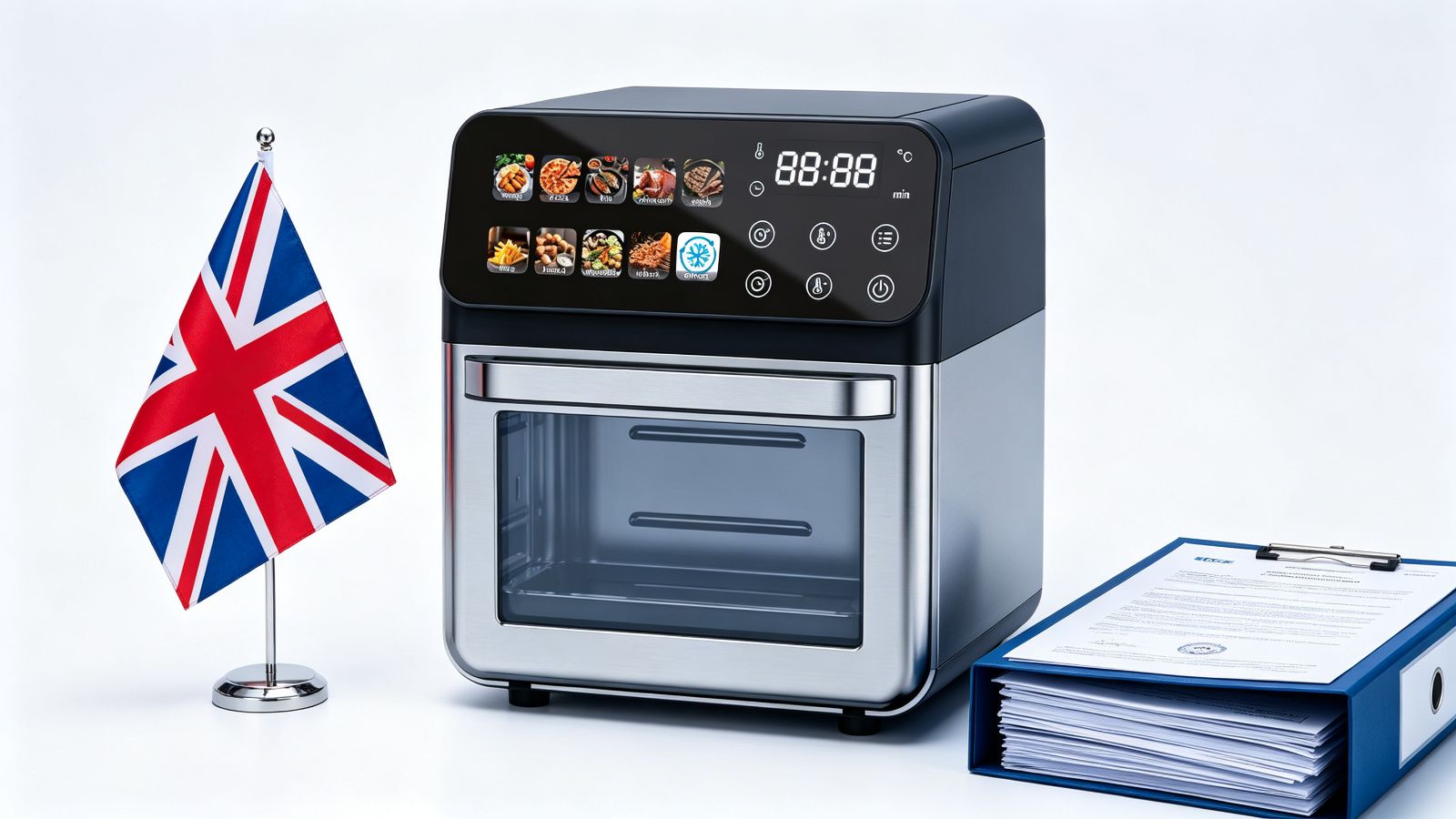
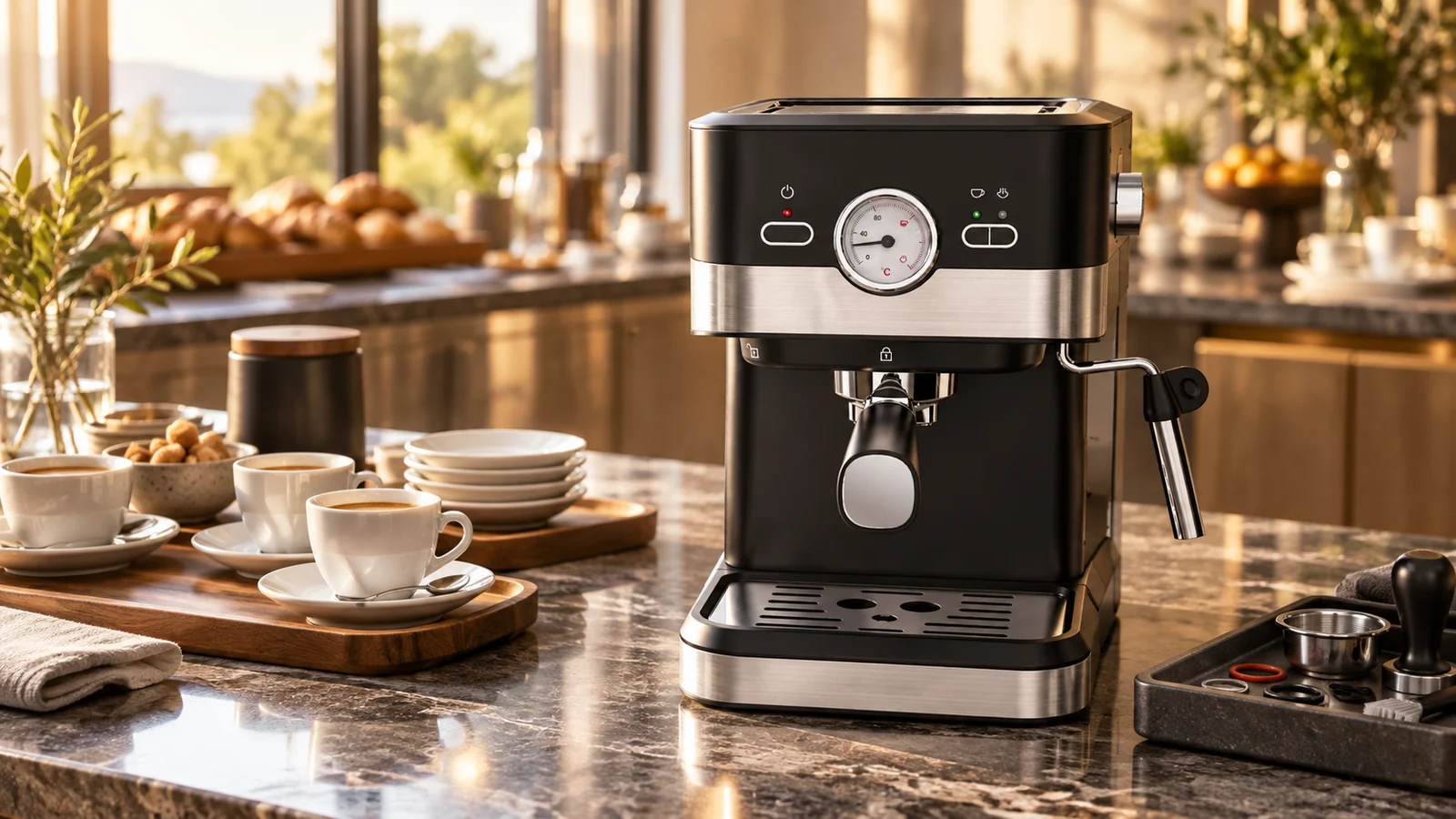
UKCA marking is the UK's post-Brexit conformity assessment mark for electrical products.
UKCA vs CE: What Changed After Brexit
The UKCA (UK Conformity Assessed) mark is the UK's replacement for the CE mark in Great Britain. While the underlying technical standards are largely aligned (both use EN/IEC standards), the legal framework, documentation, and responsible person requirements differ. If you currently ship to both the EU and UK, you likely need both CE and UKCA compliance — our CE marking documentation checklist covers the EU side in detail.
| Requirement | CE (EU) | UKCA (Great Britain) |
|---|---|---|
| Marking | CE mark | UKCA mark |
| Declaration | EU Declaration of Conformity | UK Declaration of Conformity |
| Responsible person | EU Authorised Representative (if manufacturer outside EU) | UK Responsible Person (if manufacturer outside UK) |
| Conformity assessment body | EU Notified Body (where required) | UK Approved Body (where required) |
| Applicable legislation | EU directives/regulations (LVD, EMC, RoHS, ErP) | UK regulations (ESQPR, EMC Regulations, UK RoHS, UK ErP) |
| Technical file language | Any EU official language | English |
| Market surveillance | EU member state authorities | UK OPSS / Trading Standards |
| Northern Ireland | CE applies | UKCA does NOT apply in NI |
Which UK Regulations Apply to Kitchen Appliances
Kitchen appliances fall under several UK regulatory regimes. Each requires its own assessment and documentation:
| UK Regulation | Covers | Equivalent EU Law |
|---|---|---|
| Electrical Equipment (Safety) Regulations 2016 (ESQPR) | Electrical safety of all mains-powered appliances | Low Voltage Directive 2014/35/EU |
| Electromagnetic Compatibility Regulations 2016 | EMC emissions and immunity | EMC Directive 2014/30/EU |
| RoHS Regulations 2012 (as amended) | Restriction of hazardous substances in electrical equipment | RoHS Directive 2011/65/EU |
| Ecodesign for Energy-Related Products Regulations 2010 | Energy efficiency and standby power | ErP Directive 2009/125/EC |
| REACH Regulations 2008 (UK REACH) | Chemical substances in products | EU REACH (EC) 1907/2006 |
| General Product Safety Regulations 2005 | General product safety and recall obligations | General Product Safety Regulation |
Note: UK REACH diverges from EU REACH over time. Substances of Very High Concern (SVHC) candidate lists are maintained separately by the UK and EU. If your product contains plastic parts, coatings, or electronic components, verify both UK and EU SVHC compliance if you sell into both markets.
UK Declaration of Conformity: What It Must Contain
The UK Declaration of Conformity (UK DoC) is a legal document that must be signed by the manufacturer or their UK Responsible Person. It must be in English and contain:
- Manufacturer name and address — the legal entity responsible for the product
- UK Responsible Person name and address — if manufacturer is based outside the UK
- Product identification — model number, product description, serial number or batch
- List of applicable UK regulations — e.g., Electrical Equipment (Safety) Regulations 2016, EMC Regulations 2016
- List of harmonised standards used — e.g., BS EN 60335-1, BS EN 60335-2-15, BS EN 55014-1
- Details of UK Approved Body — only if third-party assessment is required (rare for kitchen appliances)
- Place and date of issue
- Signature and name of authorised signatory — with their position in the company
The UK DoC differs from the EU DoC in format and signatory. If you already have an EU DoC, you cannot simply change the title — you must ensure the referenced regulations are UK-specific and the signatory has authority for the UK market. Our Declaration of Conformity review checklist covers common DoC errors that apply to both EU and UK documents.
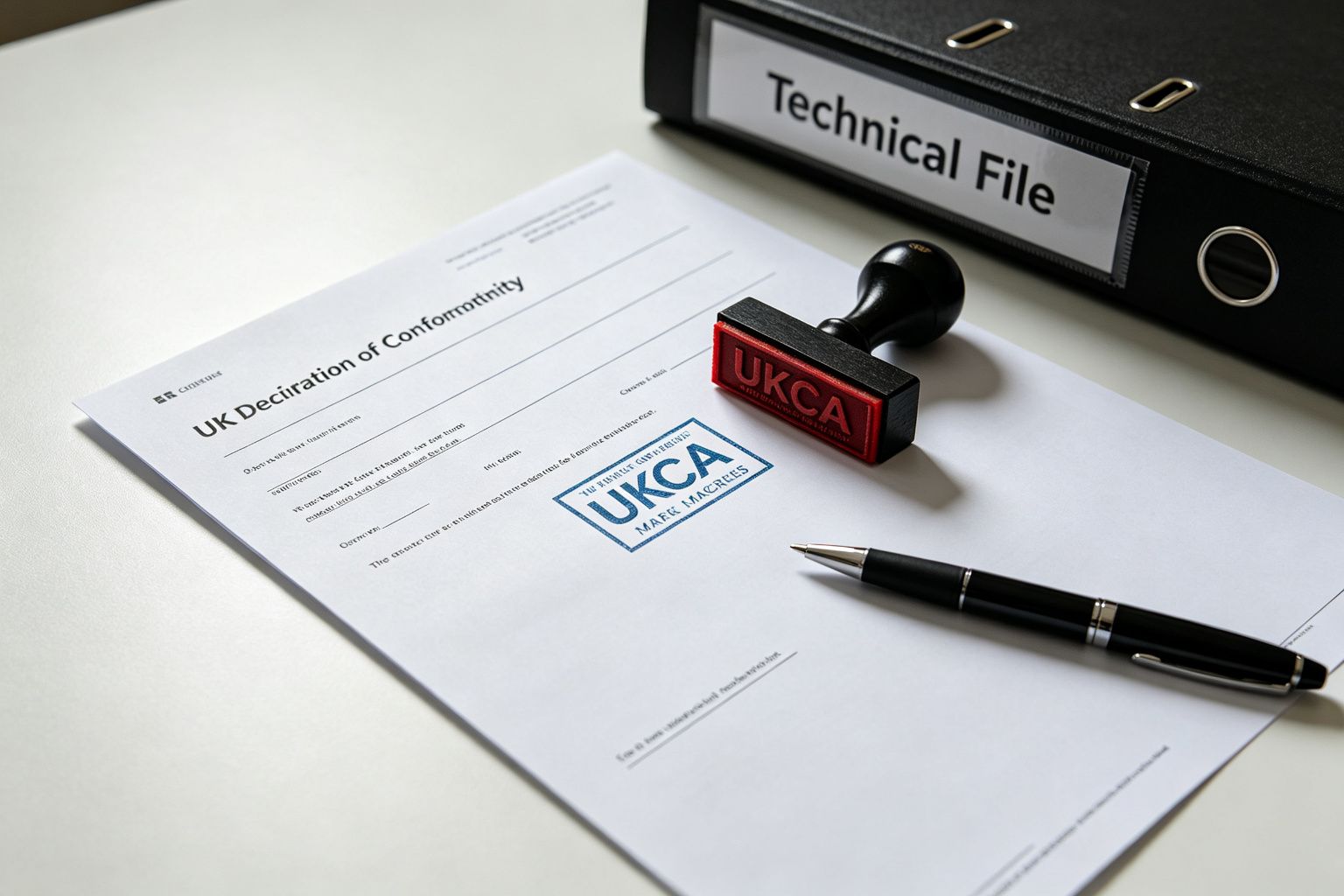
The UK Declaration of Conformity must list UK-specific regulations and be signed by an authorised person.
UK Responsible Person: Do You Need One?
If your company is based outside the UK (e.g., in China), you must appoint a UK Responsible Person for most regulated products, including electrical appliances. The UK Responsible Person:
- Must be established in the UK (has a UK address)
- Keeps the UK Declaration of Conformity and technical documentation available for market surveillance authorities
- Ensures the product is correctly labelled with UKCA and contact information
- Cooperates with UK market surveillance authorities on safety issues
- Can be the importer, a dedicated compliance service provider, or a UK-based subsidiary
Without a UK Responsible Person, your products cannot legally be placed on the GB market. Many importers act as the UK Responsible Person for their own private label products — confirm this in your supply agreement before shipping. The UK Responsible Person's name and address must appear on the product label or packaging.
UKCA Labelling Requirements for Kitchen Appliances
The UKCA mark must be visible, legible, and indelible. For kitchen appliances, it is typically placed on the rating label alongside other mandatory information:
| Label Element | Requirement |
|---|---|
| UKCA mark | Minimum 5mm height; must be visible on product or packaging |
| Manufacturer name/address | Full legal name and registered address |
| UK Responsible Person name/address | Required if manufacturer is outside the UK |
| Model/type identifier | Unique model number or batch code |
| Electrical ratings | Voltage (220-240V), frequency (50Hz), power (W/kW) |
| Serial number | For traceability |
| Country of origin | "Made in China" or equivalent |
| Warning symbols | As required by applicable standards (e.g., read manual, disconnect before cleaning) |
Note: The UKCA mark can be placed on the product, packaging, or accompanying documentation — but if it is on packaging or documentation only, you must justify why it cannot be on the product (e.g., product size). For most kitchen appliances, the UKCA mark should be on the rating label on the product itself. Our rating label checklist covers label design principles that apply to both EU and UK markets.
6 UKCA Compliance Mistakes That Delay Shipments
1. Assuming CE = UKCA. CE marking does not demonstrate UKCA compliance. You need separate UK documentation, a UK Responsible Person, and the UKCA mark.
2. No UK Responsible Person. Shipping without a UK-based responsible person means your products cannot be legally placed on the GB market and may be held at customs.
3. Using an EU DoC as a UK DoC. The UK DoC must reference UK regulations (not EU directives) and be signed by someone with UK market authority.
4. UKCA mark too small or missing. The minimum height is 5mm. A printed mark that fades or rubs off is not considered "indelible."
5. Forgetting Northern Ireland. UKCA does not apply in Northern Ireland. If you ship to NI, you need CE marking (and CE+UKNI where a notified body is involved).
6. No technical file in English. UK authorities require technical documentation in English. A Chinese or German technical file will not satisfy market surveillance requests.
When Self-Certification Is Enough (and When It Is Not)
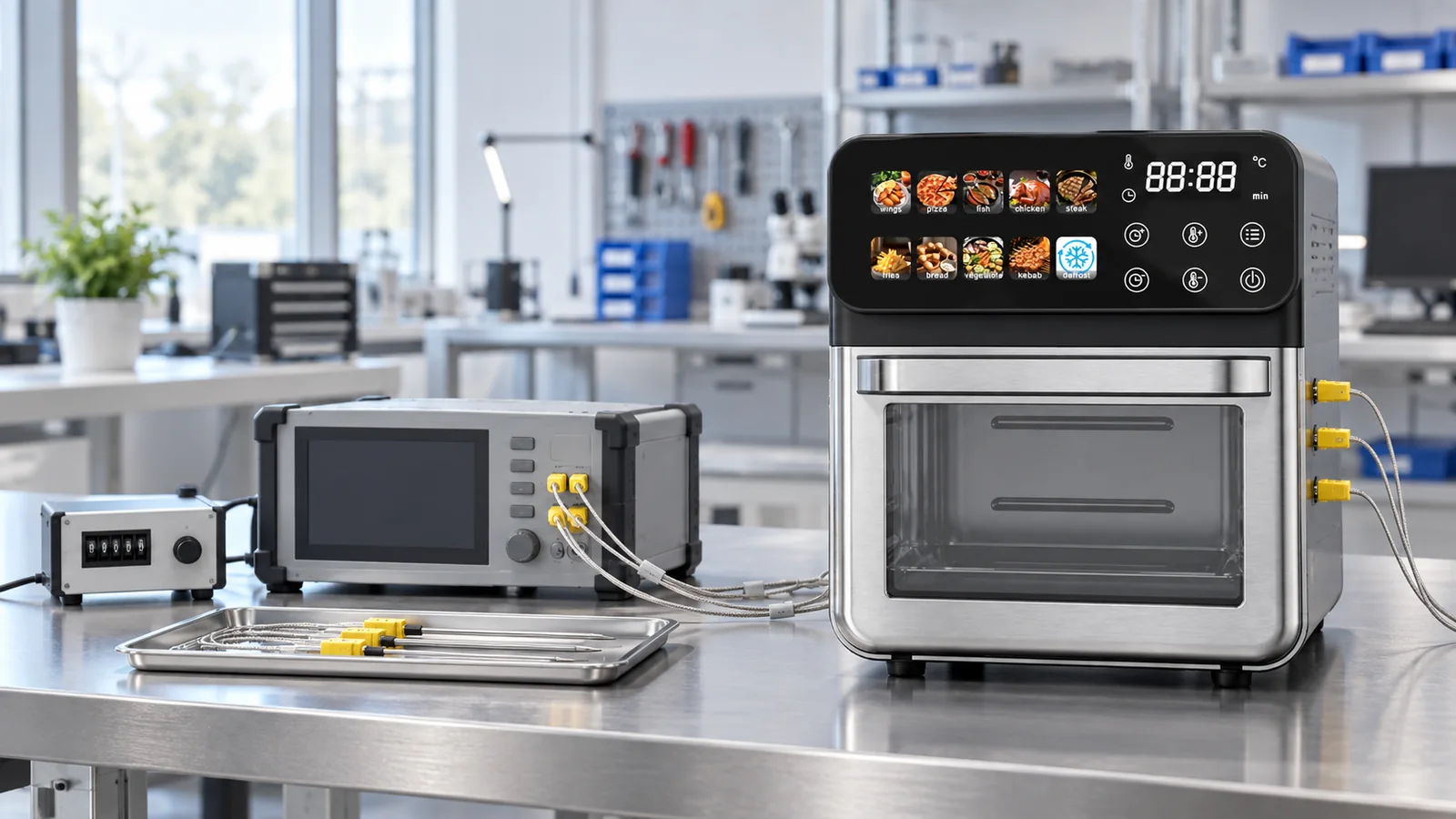
Most kitchen appliances (air fryers, blenders, coffee machines, microwaves, pressure cookers) can be self-certified for UKCA. This means the manufacturer conducts the conformity assessment, compiles the technical file, issues the UK DoC, and affixes the UKCA mark — no UK Approved Body involvement is required. However, self-certification does not mean "no testing." You must still have valid test reports from an accredited lab for all applicable standards.
UK Approved Body involvement is typically required only for products with higher risk profiles (e.g., certain gas appliances, medical devices). For standard electrical kitchen appliances, self-certification is the normal route. But be honest about your test coverage: a test report for a similar model is not sufficient if the electrical design, motor, or heating element differs. Each model must have its own test evidence or a valid technical file showing equivalence.
Also, UK standards (BS EN) are currently aligned with EU standards (EN), but this alignment may diverge over time. Always verify the current edition of each standard with your testing lab before issuing a UK DoC.
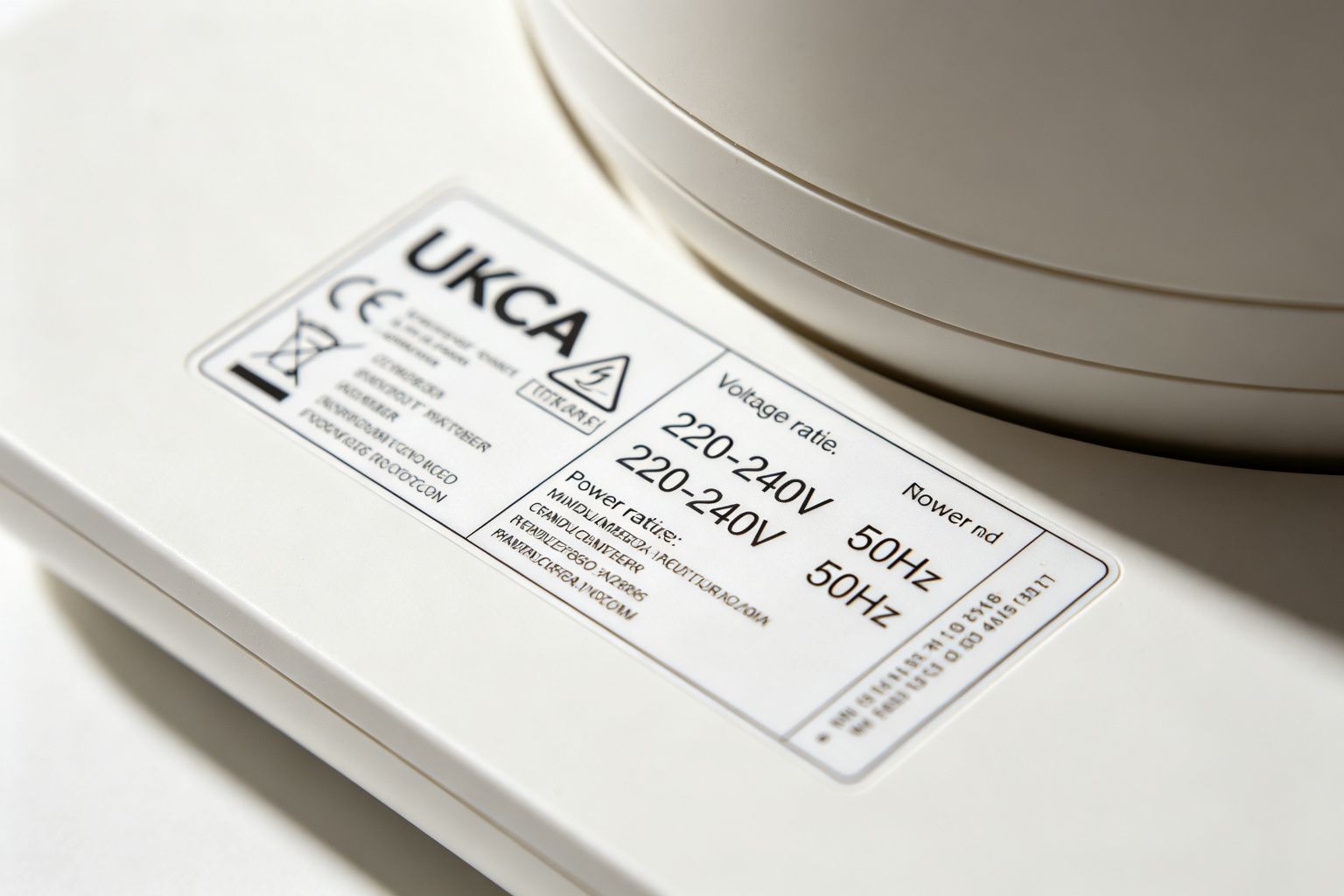
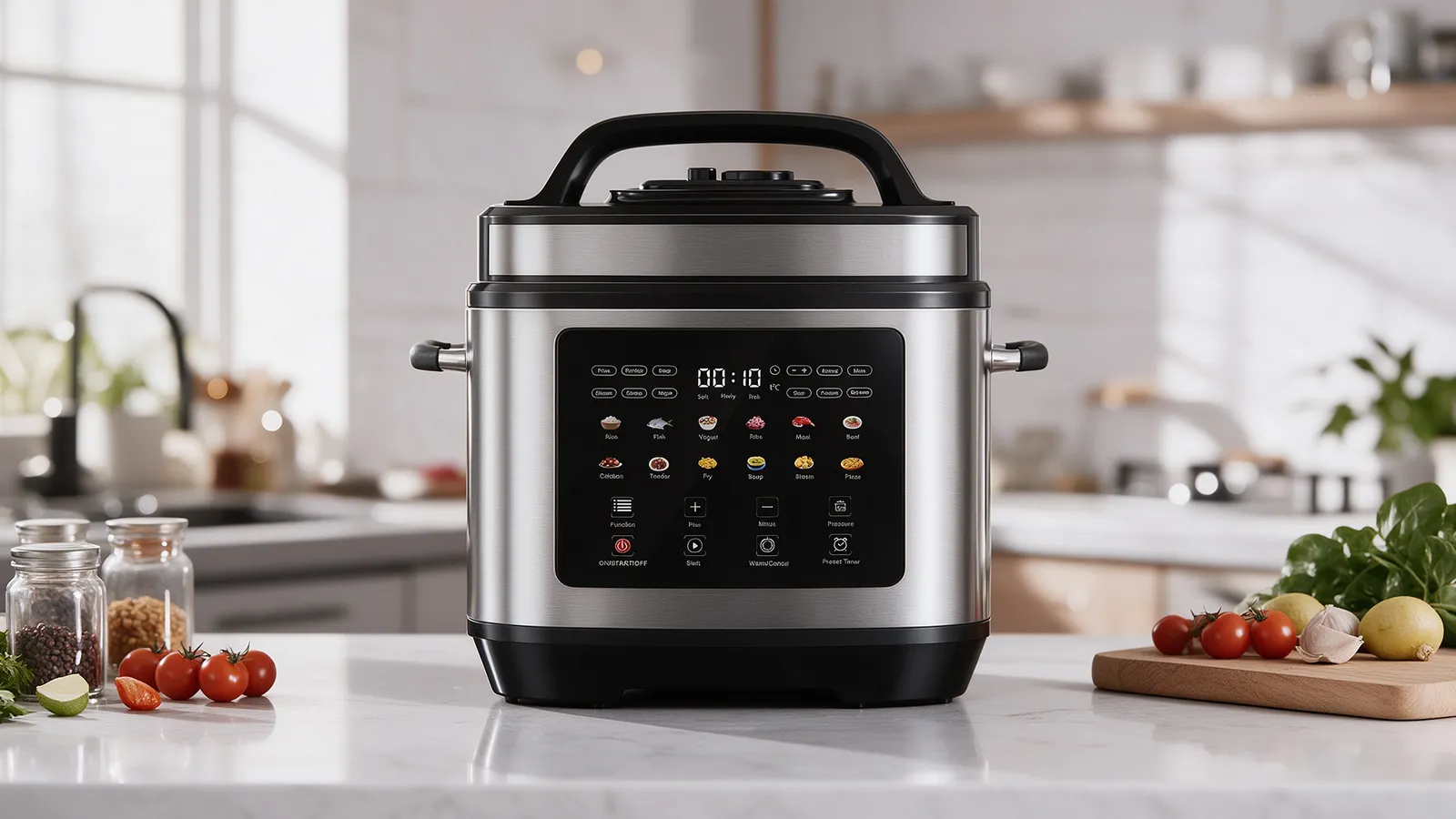
The UKCA mark should be on the product rating label, alongside voltage, power, and manufacturer details.
Technical Documentation: What to Keep on File
UK market surveillance authorities (OPSS, Trading Standards) can request your technical documentation at any time. Keep these files for at least 10 years from the last date the product was placed on the market:
- Product design description — including circuit diagrams, PCB layouts, mechanical drawings
- Bill of materials (BOM) — with material specifications and supplier information
- Test reports — from accredited labs for safety (BS EN 60335 series), EMC (BS EN 55014), and RoHS
- Risk assessment — identifying hazards and how they are mitigated
- User manual and label artwork — in English, with all required warnings
- UK Declaration of Conformity — signed and dated
- UK Responsible Person agreement — written appointment letter
- Production quality control records — showing consistent manufacturing
For user manuals, ensure all safety warnings are in English and reference UK-specific requirements. Our user manual and warning label review covers common manual deficiencies that trigger market surveillance action.
The 12-Point UKCA Compliance Checklist for Kitchen Appliances
- UKCA mark on product (min 5mm, visible, indelible)
- UK Declaration of Conformity issued (English, signed, UK regulations listed)
- UK Responsible Person appointed (UK address, written agreement)
- UK Responsible Person name/address on product or packaging
- Manufacturer name/address on product or packaging
- Model number and serial number on product
- Electrical ratings on rating label (220-240V, 50Hz, power)
- Test reports for BS EN 60335-1 + applicable part 2 standard
- EMC test reports (BS EN 55014-1, BS EN 55014-2, BS EN 61000-3-2/3)
- RoHS test report or declaration (UK RoHS)
- User manual in English with all required safety warnings
- Technical documentation compiled and stored (10-year retention)
- Country of origin marked ("Made in China")
- Northern Ireland shipments use CE (not UKCA)
What to Do Before Your First UK Shipment
Start by confirming whether your importer acts as the UK Responsible Person, or whether you need to appoint one separately. Prepare a complete RFQ data pack that includes UKCA requirements so suppliers quote with the right testing and documentation. For food-contact parts (blender jars, coffee machine water tanks), verify UK food contact compliance separately — our food contact materials guide covers the principles, though UK requirements may differ slightly from EU regulations.
APEXDURA manufactures kitchen appliances with both CE and UKCA compliance support. To discuss UKCA-compliant private label production, explore our OEM/ODM capabilities or request our UKCA compliance checklist PDF — a printable one-page summary of every requirement above.
Before your next UK shipment: Run through the 12-point UKCA checklist and confirm your UK Responsible Person is in place. Missing documentation is the #1 cause of UK customs delays for electrical appliances. For APEXDURA projects, request the UKCA compliance checklist PDF here and we will send it within one business day.
Limitations and Update Note
This guide reflects UKCA compliance requirements for kitchen appliances as of September 2026. UK regulations and standards may be updated; the UK government has previously extended CE recognition deadlines, so always verify the current requirements with the UK Office for Product Safety and Standards (OPSS) or a qualified UK compliance consultant before shipping. UK Approved Body involvement is generally not required for standard electrical kitchen appliances, but specific product categories may differ. This article is for informational purposes and does not constitute legal advice. For UKCA certification, consult a qualified UK testing lab or compliance consultant. Last reviewed: September 9, 2026.