






What Exactly Does an Air Fryer Do?
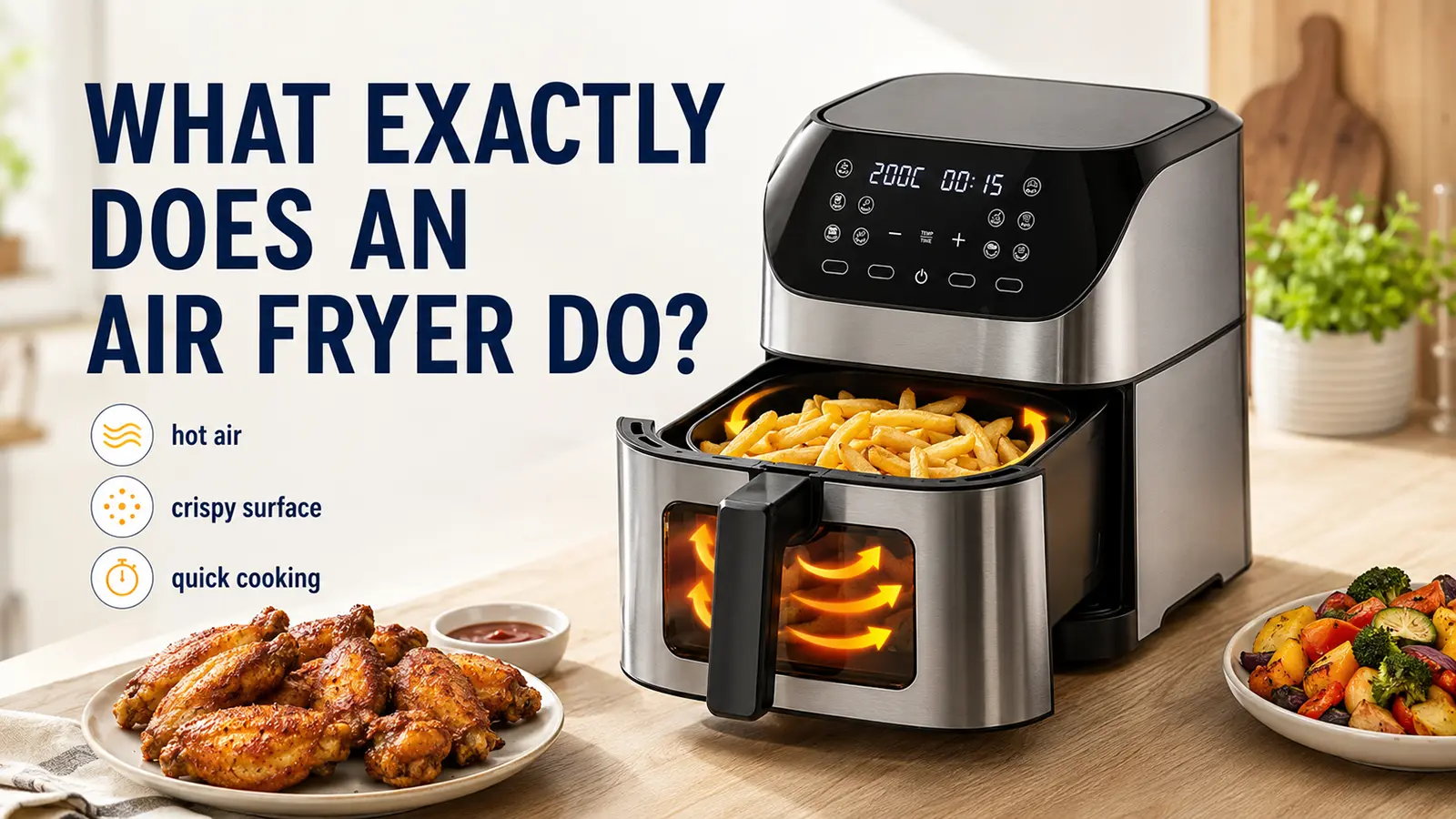
An air fryer is a compact countertop appliance that cooks food with fast-moving hot air. It can make fries, chicken wings, vegetables and leftovers crisp on the outside without submerging them in oil. The key is understanding what it does well, what it does not do, and how to use it correctly.
An air fryer does not fry food by submerging it in oil. Instead, it uses a heating element, fan, basket or tray, and a compact cooking chamber to push hot air around the food. This rapid airflow helps remove surface moisture and brown the outside of food, which is why many users describe the result as crispy.
That simple explanation is the difference between expecting magic and getting good results. An air fryer can be very useful, but it works best when food has space for air to move, the right temperature is selected and the user understands that “air frying” is not the same thing as deep frying.
Key Takeaways
- An air fryer is best understood as a compact convection cooker, not a small deep fryer.
- It uses a heating element and fan-driven airflow to cook food quickly and create a crisp surface.
- It can use less added oil than deep frying in many recipes, but results depend on food type, portion size and cooking settings.
- It works especially well for fries, wings, frozen snacks, roasted vegetables and reheating foods that should stay crisp.
- The biggest mistakes are overfilling the basket, using wet batter, ignoring food safety and expecting every food to taste deep-fried.
What an Air Fryer Actually Does
An air fryer heats air and circulates it rapidly around food. The food sits in a basket, tray or rack that allows air to pass around the surface. As the hot air moves, moisture evaporates from the outer layer. The surface browns and firms, while the inside continues cooking.
This is why air fryers work especially well for foods that benefit from a crisp exterior: fries, chicken wings, frozen snacks, roasted vegetables, reheated pizza, breaded items and small portions of meat or seafood. Many models can also bake, roast or reheat, although the result depends on the appliance size, accessories and recipe.
The U.S. Department of Agriculture’s Food Safety and Inspection Service describes air fryers as countertop convection ovens that cook food through rapid circulation of hot air. It also reminds users to follow manufacturer instructions and check safe internal temperatures for relevant foods. That distinction is important: an air fryer can crisp food, but it still needs correct time, temperature and safe handling.
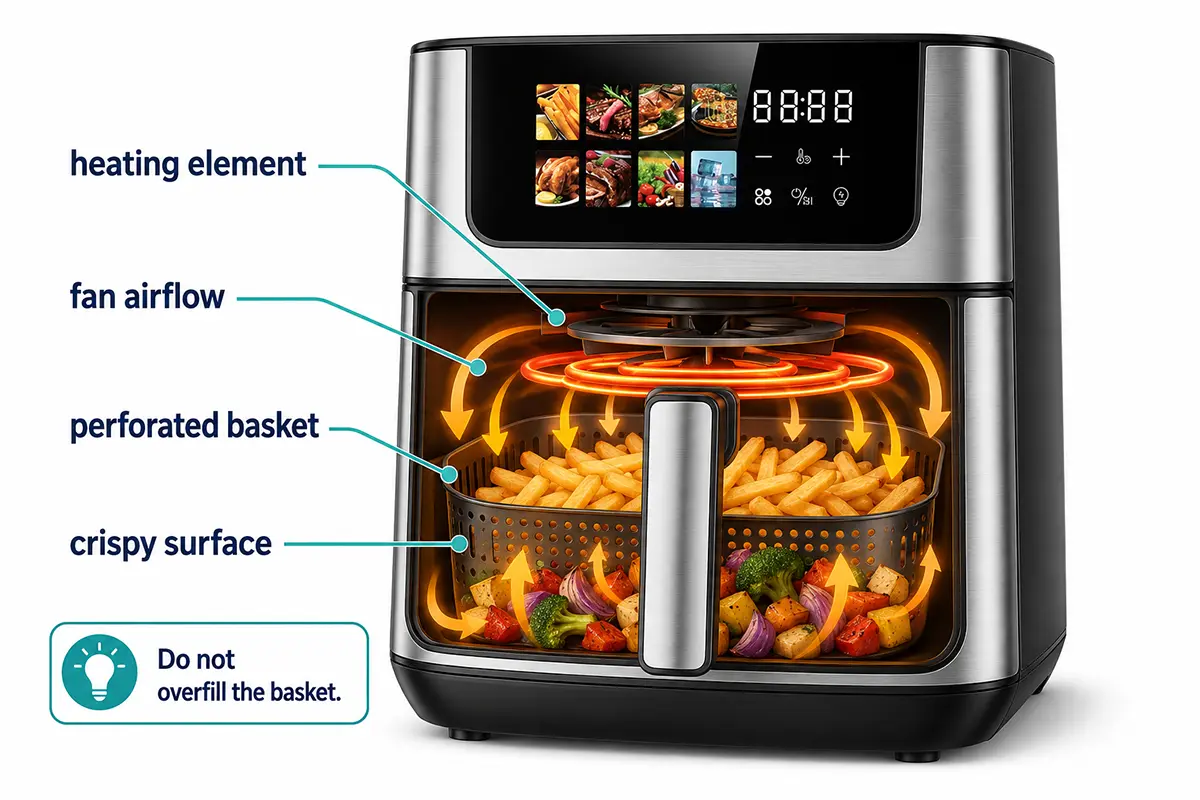
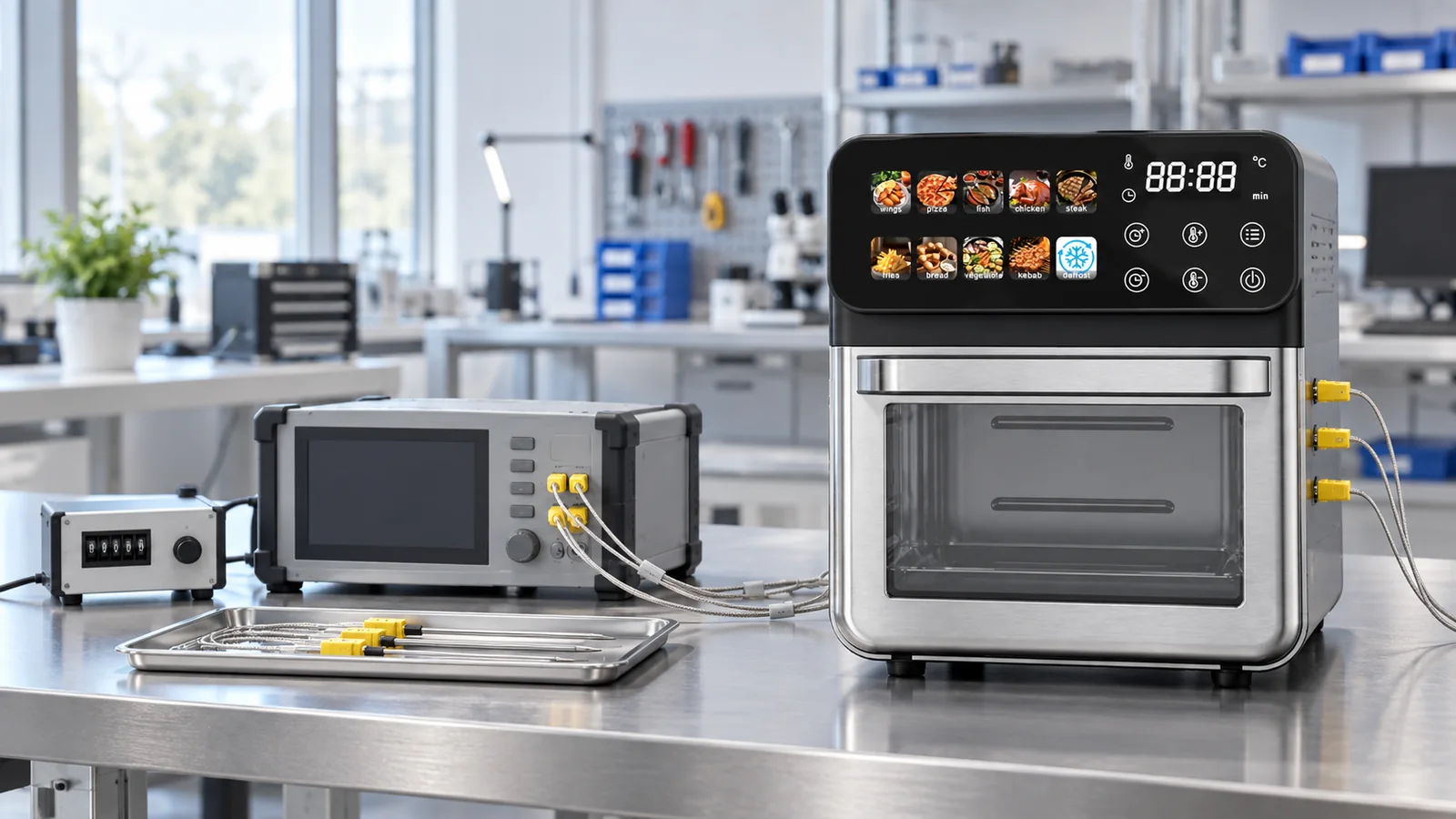
An air fryer uses a heating element and fast airflow to cook food and crisp the surface.
Air Fryer, Oven and Deep Fryer: The Simple Difference
Many buyers ask whether an air fryer is just a small oven. The answer is: partly, but not exactly. It uses convection like an oven, but the chamber is smaller and the airflow is usually more concentrated. That helps it heat quickly and create stronger surface drying for small batches.
| Appliance | How it cooks | Typical strength | What to remember |
|---|---|---|---|
| Air fryer | Rapid hot-air circulation in a compact chamber. | Fast crisping, reheating and small-batch roasting. | Overfilled baskets reduce airflow and can create uneven results. |
| Convection oven | Hot air circulates in a larger oven cavity. | Larger trays, baking and family-size cooking. | May take longer to preheat and may not crisp small items as quickly. |
| Deep fryer | Food is immersed in hot oil. | Strong frying texture and high heat transfer. | Requires oil handling, cleaning and different safety considerations. |
The easiest way to remember the difference is this: a deep fryer cooks with oil, a convection oven cooks with hot air in a large space, and an air fryer cooks with concentrated hot air in a smaller space. That smaller chamber is why it often feels quick and convenient for everyday portions.
What Foods Does an Air Fryer Handle Well?
An air fryer is strongest when food has enough surface area for airflow and does not require a large amount of liquid oil. It is usually good for frozen snacks, potato products, chicken pieces, vegetables, reheating leftovers and compact baking tasks. It is less suitable for very wet batter, very large roasts, crowded baskets or foods that need slow moist cooking.
| Cooking task | How an air fryer helps | What users should do |
|---|---|---|
| Frozen fries or snacks | Fast airflow crisps the exterior. | Shake or turn during cooking and avoid overfilling. |
| Chicken wings or small meat pieces | Hot air browns the surface while cooking the inside. | Follow safe temperature guidance and use suitable cooking time. |
| Roasted vegetables | Compact heat creates browning faster than many large ovens. | Cut pieces evenly and use light oil only if the recipe requires it. |
| Reheating pizza or pastries | Dry heat helps restore crispness better than microwaving. | Use lower temperature if the surface browns too quickly. |
| Wet battered foods | Often performs poorly because batter may drip before setting. | Use breaded or pre-set coating instead of loose liquid batter. |
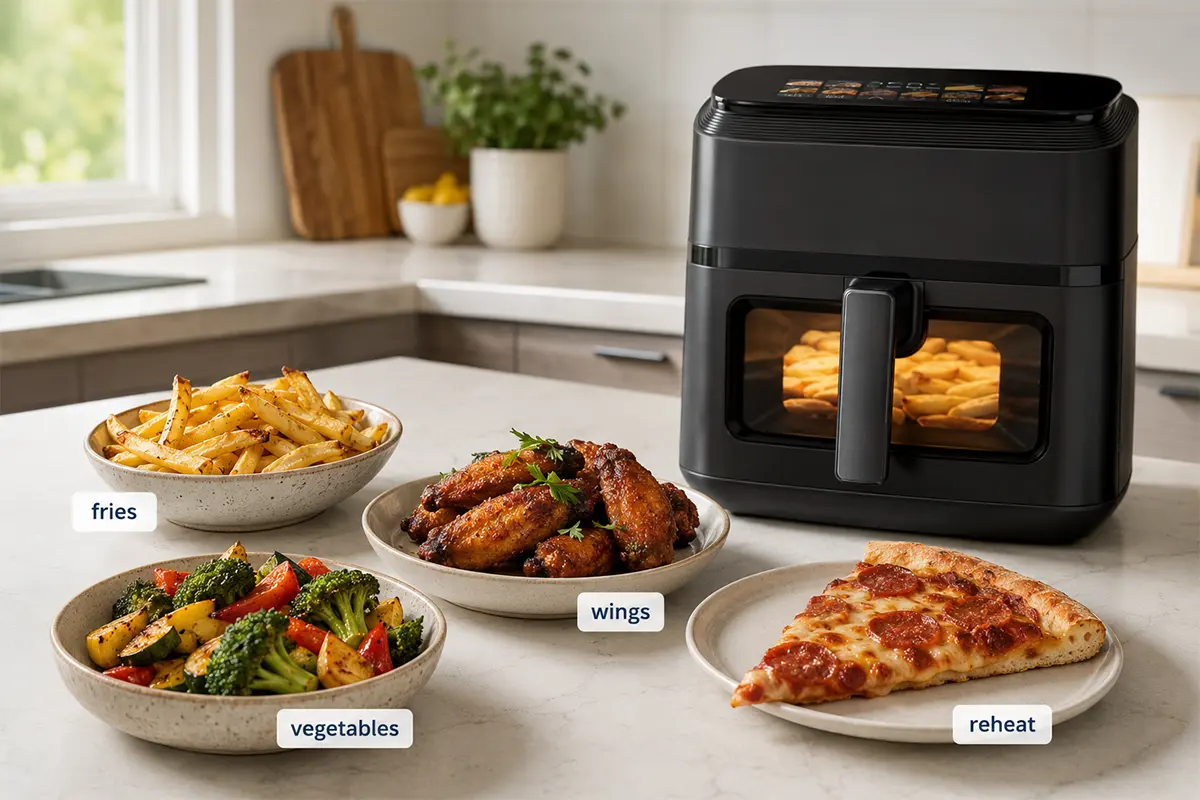
Air fryers are especially useful for foods that need a crisp surface and quick reheating.
How to Get Better Results From an Air Fryer
The most important rule is simple: leave room for air to move. If food blocks the airflow, the surface will not crisp evenly. A crowded basket often leads to pale fries, soft vegetables or unevenly cooked chicken pieces.
Preheating can help some foods, especially frozen snacks and foods that need quick surface browning. Shaking or turning food halfway through cooking also helps because it exposes more surface area to the moving hot air. For vegetables or fresh potatoes, a light coating of oil can improve browning, but the amount is usually much lower than deep frying.
Users should also match the temperature to the task. Higher heat can crisp quickly, but it may brown the outside before the inside is ready. Lower heat is useful for reheating or thicker foods. For meat and poultry, follow the appliance instructions and use safe internal temperature guidance rather than judging only by surface color.
What to Look for When Choosing an Air Fryer
Once you understand what an air fryer does, choosing one becomes easier. The goal is not always to buy the largest or most complicated model. The right air fryer should fit the kitchen, the number of people served and the foods cooked most often.
| Feature | Why it matters | What to check |
|---|---|---|
| Capacity | A larger basket can cook more food, but only if air can still circulate. | Think about usable portions, not just litre size. |
| Basket shape | Wide baskets spread food out better than deep crowded baskets. | Check whether fries, wings or vegetables can sit in a loose layer. |
| Controls | Clear time and temperature settings matter more than a long list of presets. | Look for readable icons, simple adjustment and useful temperature range. |
| Cleaning | Regular cleaning affects smell, smoke and everyday use. | Check removable parts, coating quality and corner design. |
| Accessories | Racks, trays or grill plates can expand what the appliance does. | Only choose accessories that match real cooking habits. |
| Instructions | Good guidance prevents overfilling, undercooking and unrealistic expectations. | Look for clear cooking tips, safety notes and maintenance steps. |
For readers comparing formats, APEXDURA’s air fryer product range includes different styles such as mechanical air fryers, digital air fryers, dual-basket air fryers, large-capacity air fryers and air fryer ovens.
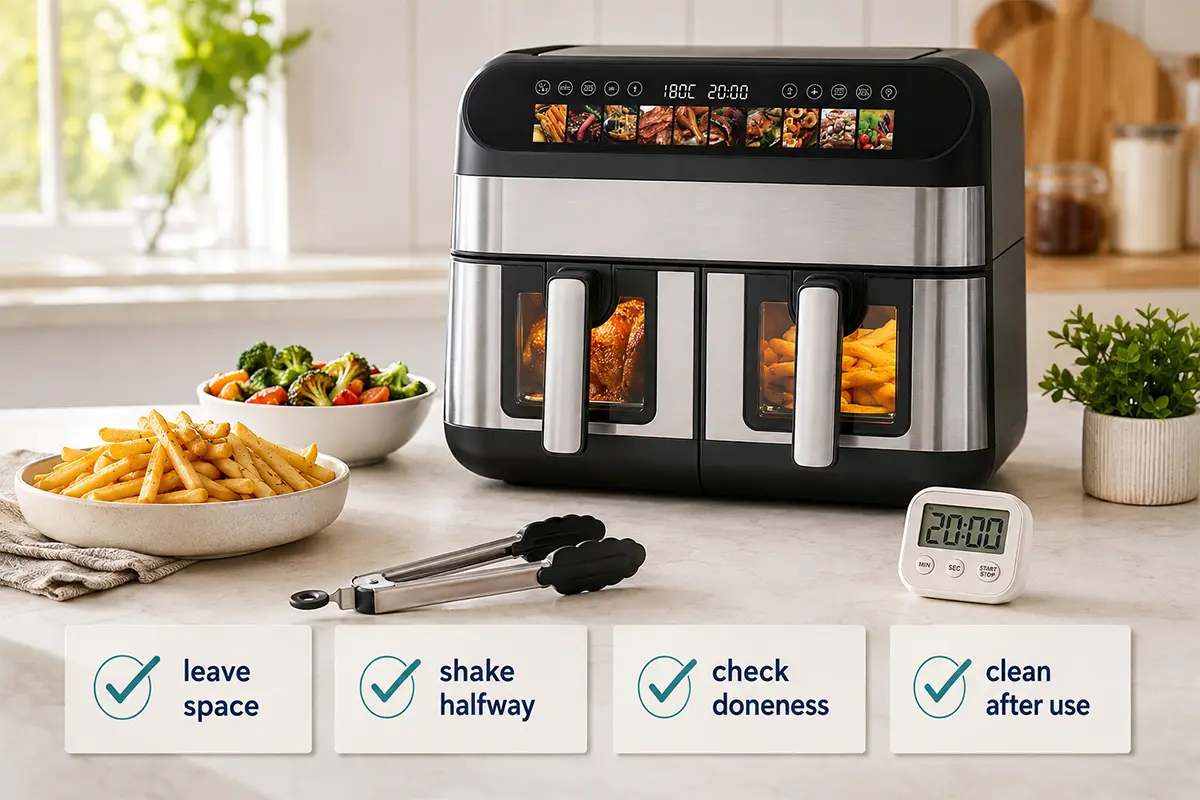
Good air fryer results usually come from the right portion size, airflow space, temperature and cleaning habits.
Common Misunderstandings About Air Fryers
The first misunderstanding is that an air fryer makes every food “fried.” It does not. It creates a crisp surface through hot air and surface drying. Foods that already contain some fat, have a dry coating or are cut into small pieces usually perform better than wet, heavy or crowded foods.
The second misunderstanding is that more power always means better cooking. Wattage matters, but it is only one part of the design. Chamber size, fan position, airflow path, heating control, basket shape and user instructions can matter just as much.
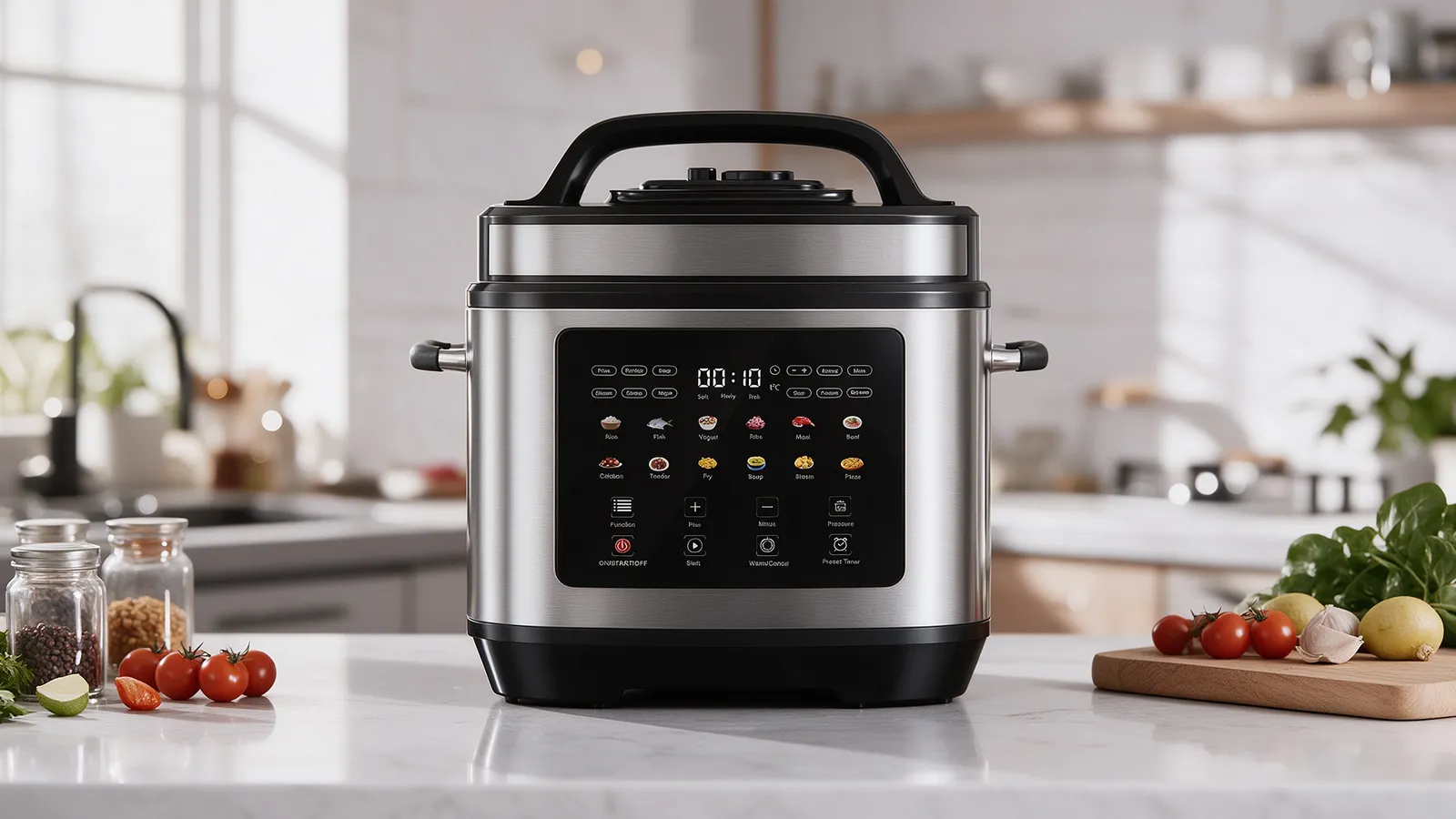
The third misunderstanding is that every digital panel makes a product premium. A digital interface can improve the experience when presets are meaningful and easy to read. It can also create confusion if icons are unclear, languages are poorly adapted or users cannot easily adjust time and temperature.
The fourth misunderstanding is that a large air fryer automatically serves families better. Large capacity is useful only when airflow, basket access, cleaning and countertop size still fit the user scenario.
Example: A Weeknight Air Fryer Meal
Imagine cooking a quick dinner after work. You cut potatoes into small pieces, toss them with a little oil and seasoning, and place them in the basket with enough space for air to move. Halfway through cooking, you shake the basket. The outside becomes golden while the inside stays soft.
In the same appliance, you can roast vegetables or reheat a slice of pizza without making it soft. This is where an air fryer feels useful: it does not replace every cooking appliance, but it makes many small everyday tasks faster and easier.
The lesson is practical. Do not fill the basket like a storage box. Treat the air fryer as a hot-air cooking chamber. Give the food surface area, check doneness and clean the basket regularly. That is how the appliance does its job best.
For Brands and Retailers: Why This Explanation Still Matters
Although this article is written as a consumer-friendly guide, the same explanation is useful for brands and retailers. A good air fryer product page should not rely only on broad claims such as “healthy,” “multifunctional” or “large capacity.” It should explain the real benefit: fast hot-air cooking, crisp texture, easier reheating, practical portion size and simple cleaning.
APEXDURA supports air fryer projects across product selection, customization discussion, sampling, production coordination and shipment preparation. Buyers planning a private-label appliance can review APEXDURA’s OEM/ODM service, production process and OEM versus ODM air fryer manufacturing guide.
Honest Advice
An air fryer is useful, but it is not magic. It will not make every food taste like restaurant deep-frying, and it will not fix poor ingredients or overcrowding. It works best when you use it for the right foods, leave space for airflow and follow sensible cooking and safety instructions.
Limitations and Update Note
This article explains general air fryer operation and everyday use considerations. Actual cooking performance depends on appliance design, food type, loading quantity, temperature, time and user habits. For meat and poultry, follow reliable food safety guidance and the product manual. For commercial sourcing or private-label projects, confirm market requirements and product documents separately. This article was updated on August 3, 2026.
Conclusion
An air fryer cooks by circulating very hot air around food in a compact chamber. That airflow can create crisp surfaces with little or no added oil in many suitable recipes, but it is not the same as deep frying and it does not perform every cooking task equally well. Its real value is convenience: quick snacks, roasted vegetables, crisp reheating and small everyday meals. If you understand the airflow principle, you will also understand the best way to use it: leave space, shake or turn food when needed, choose the right temperature and keep the basket clean.
FAQ
Does an air fryer actually fry food?
No. An air fryer does not submerge food in oil. It uses heated air and fast circulation to cook food and crisp the surface.
Does an air fryer need oil?
Many foods can be cooked with little or no added oil, but some recipes benefit from a small amount of oil for browning, flavor or texture.
Is an air fryer just a small convection oven?
It uses convection principles, but the compact chamber and concentrated airflow usually make it faster for small batches than a larger oven.
What size air fryer should I choose?
Choose based on usable portions rather than only litre size. A compact model may suit one or two people, while families may prefer a larger basket, dual-basket model or air fryer oven.
Explore air fryer options with APEXDURA. Compare mechanical, digital, dual-basket, large-capacity and oven-style air fryer formats for your market or project.